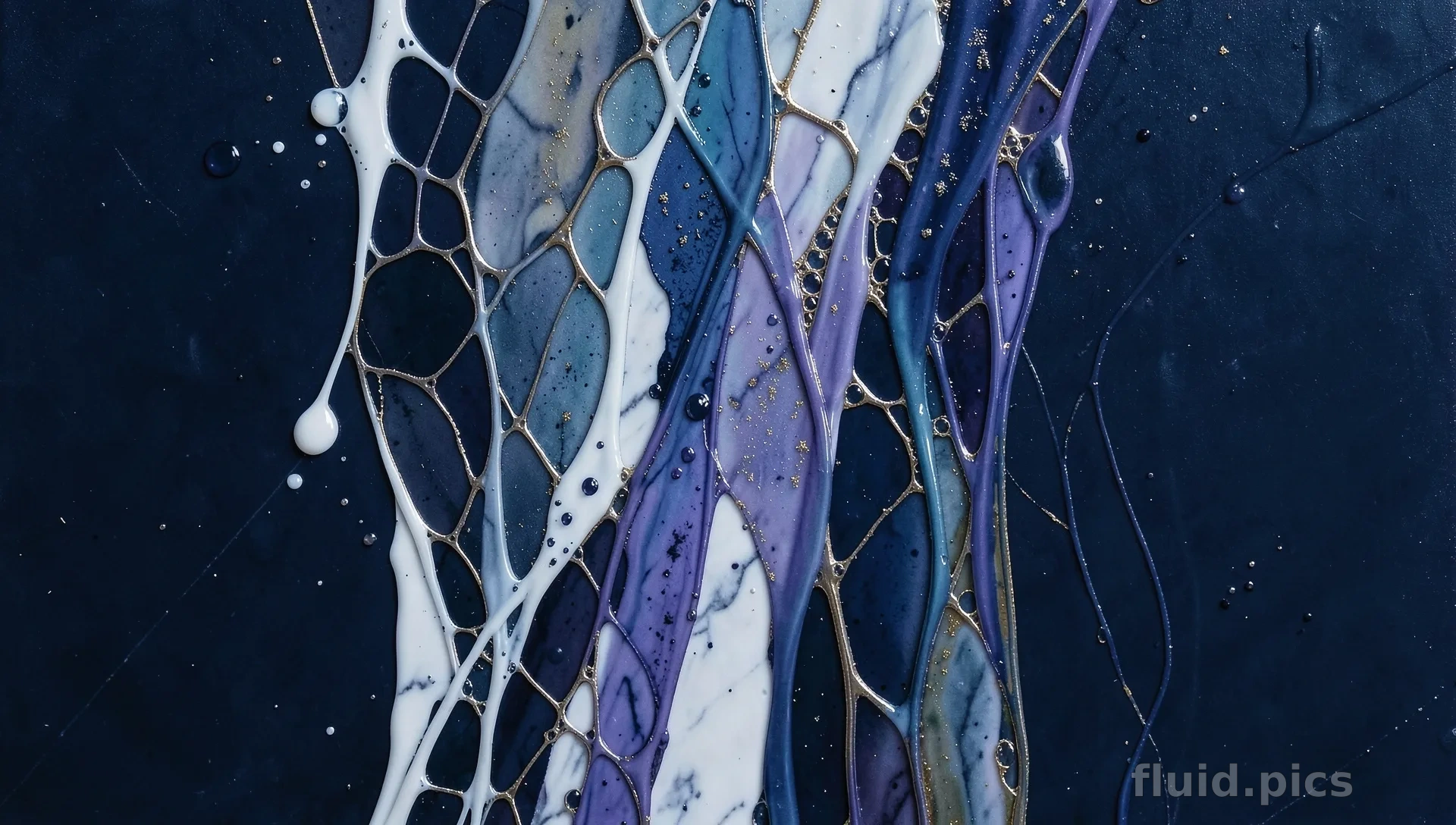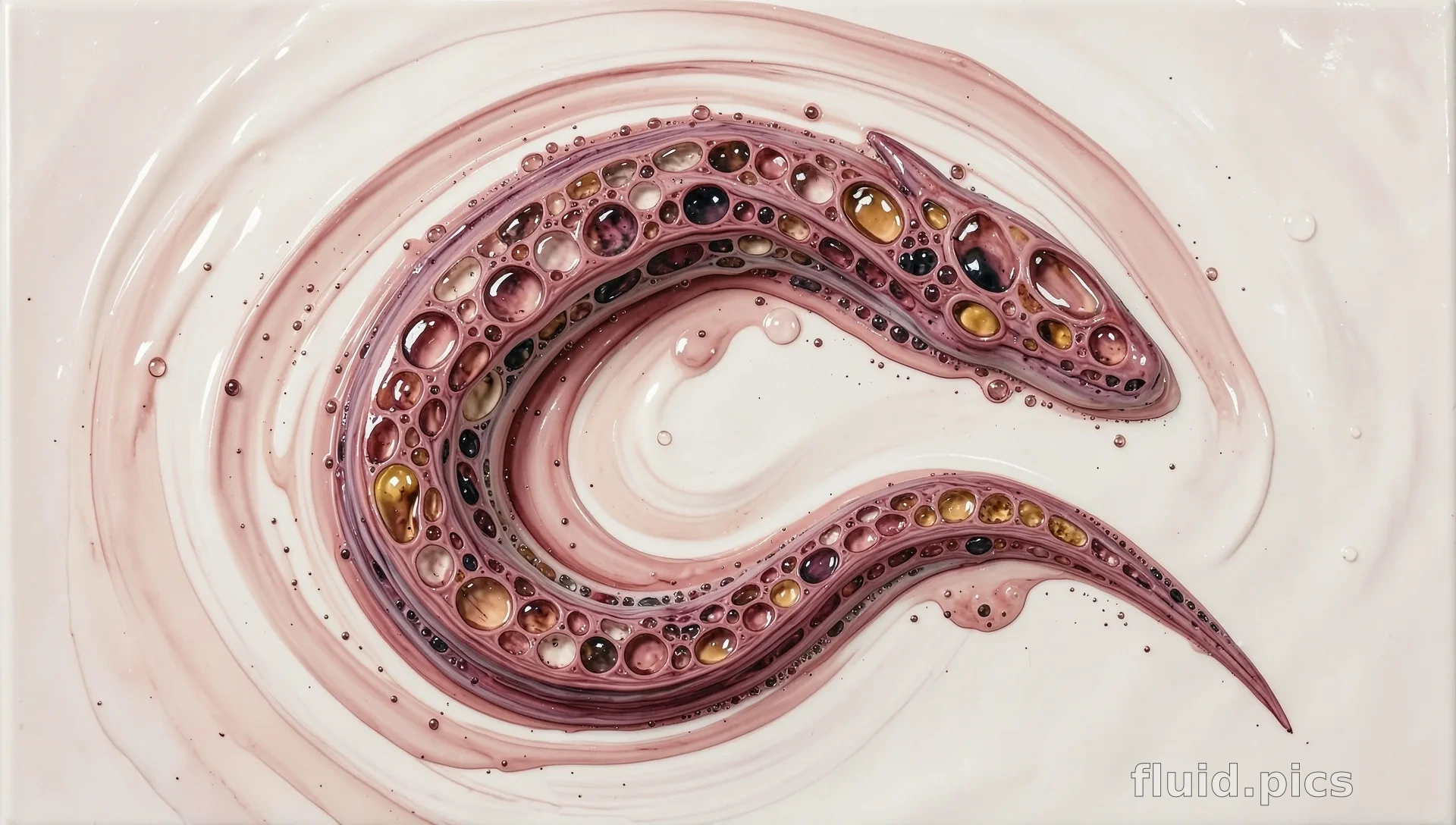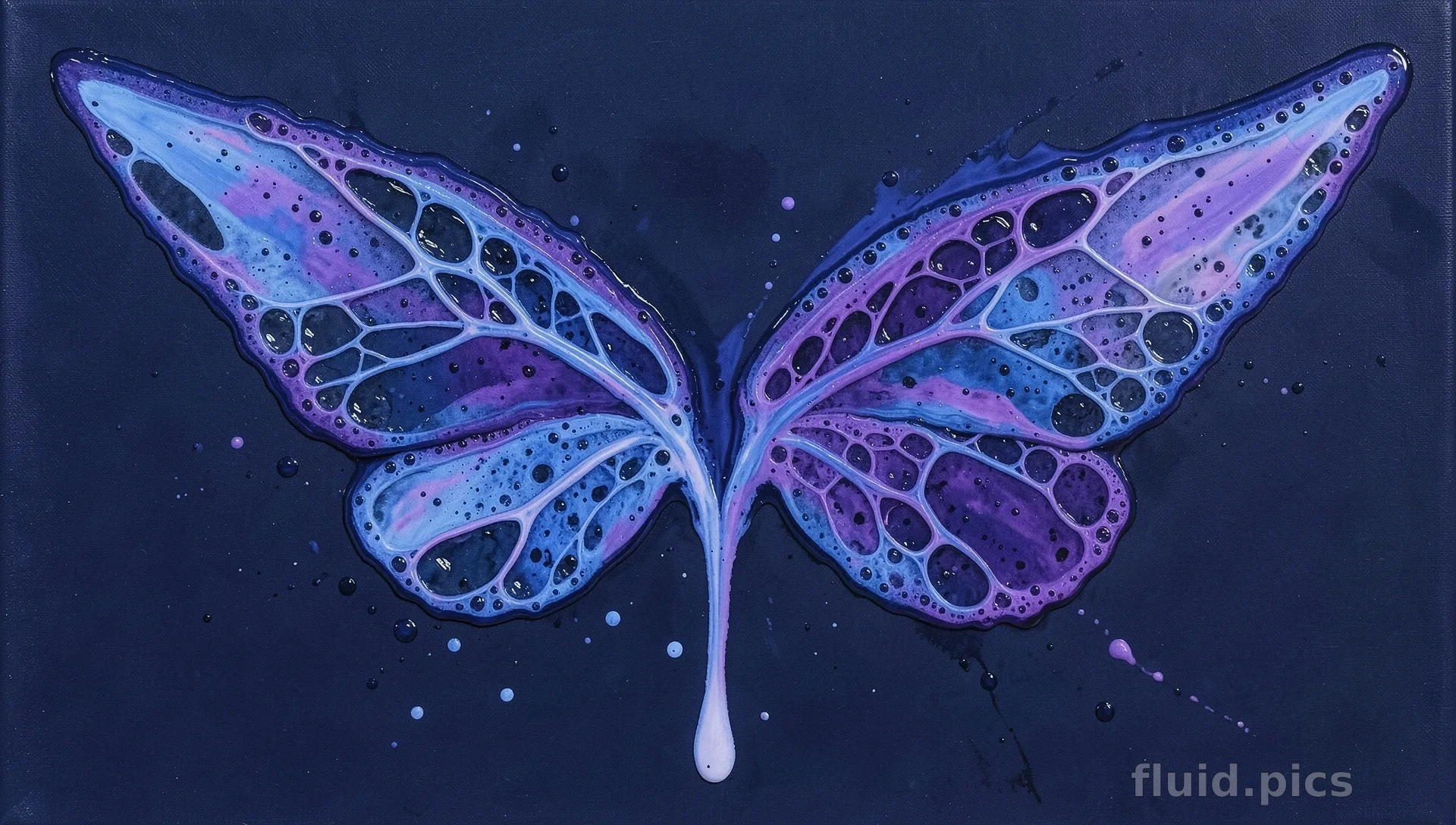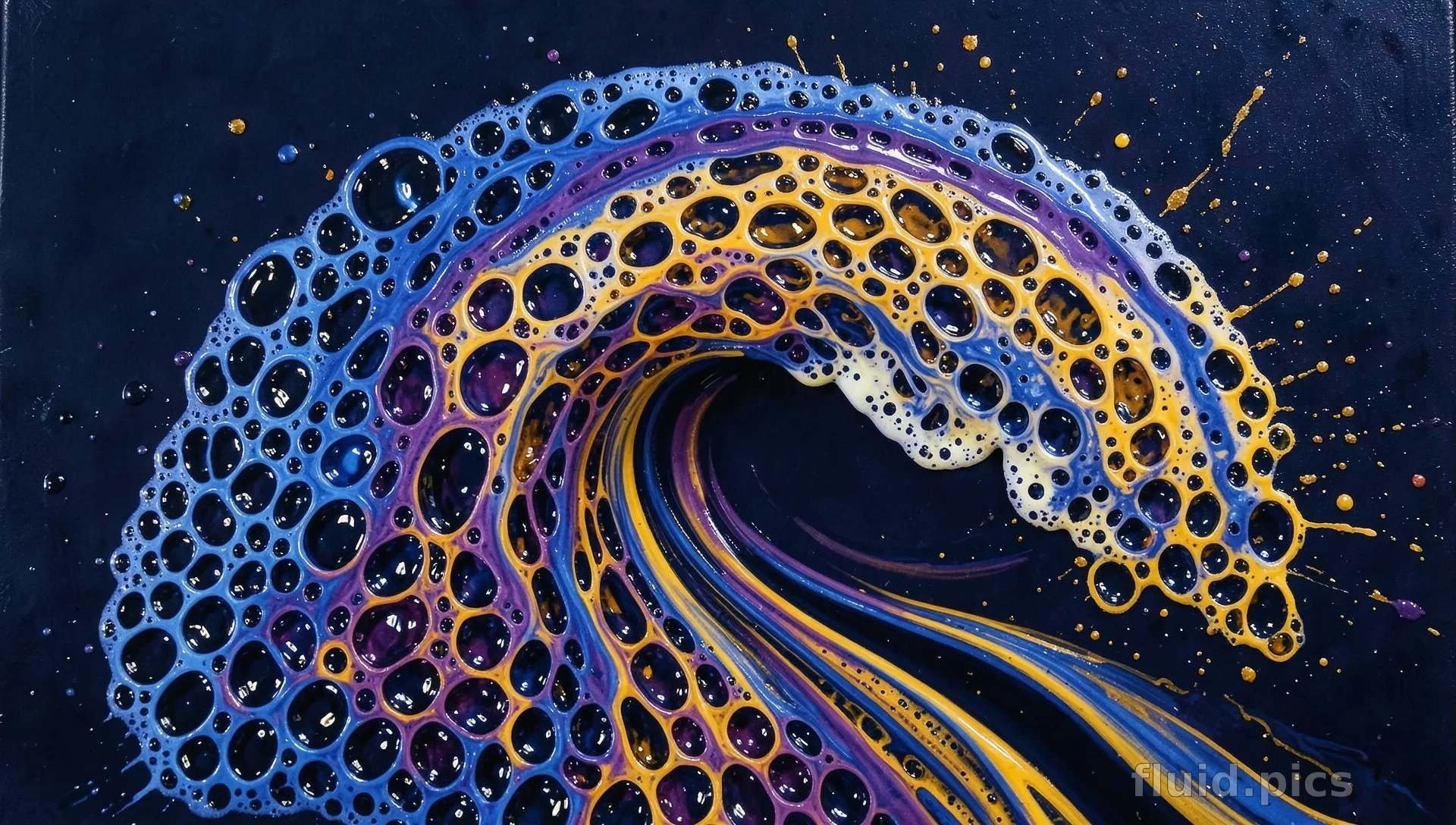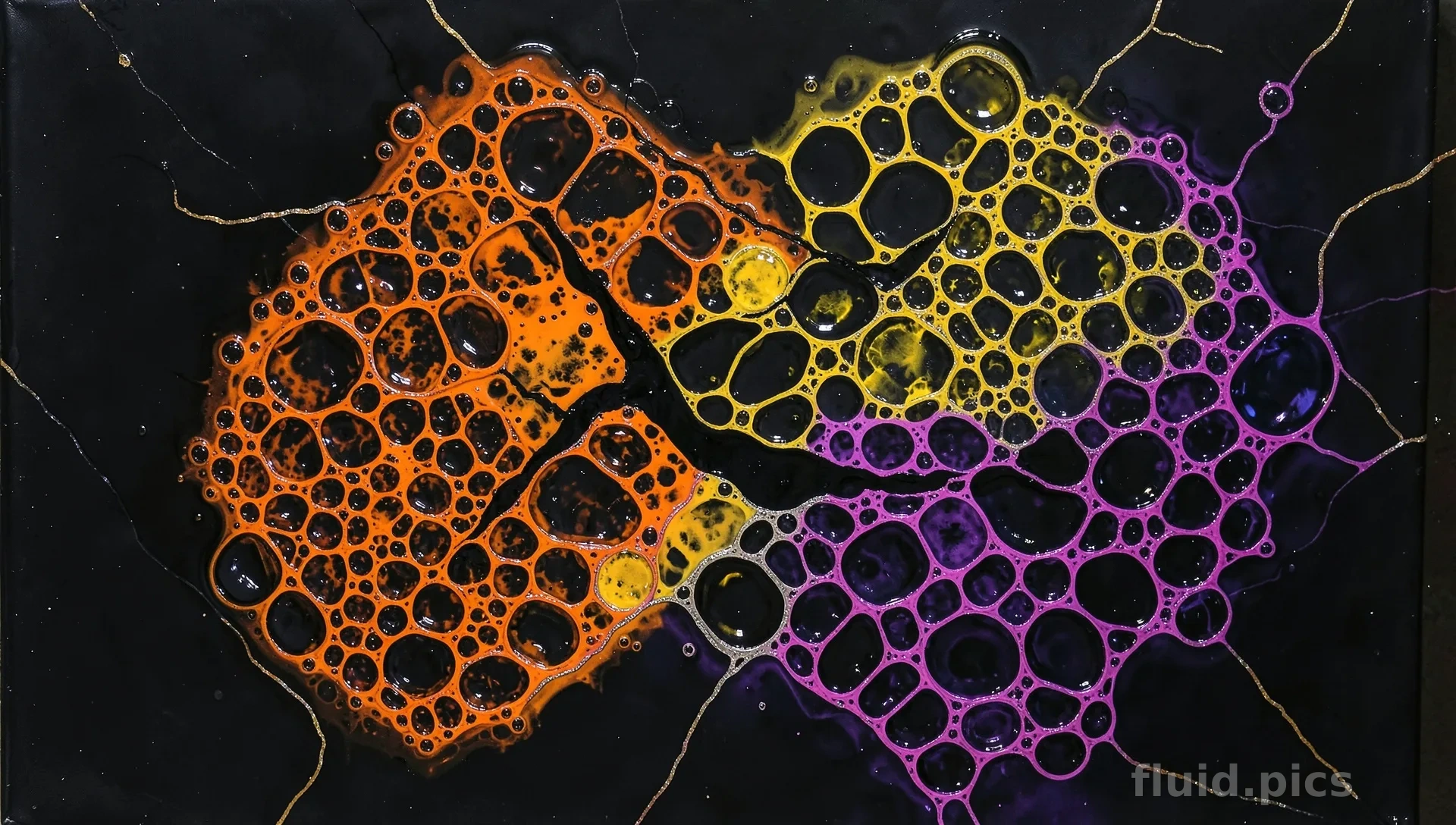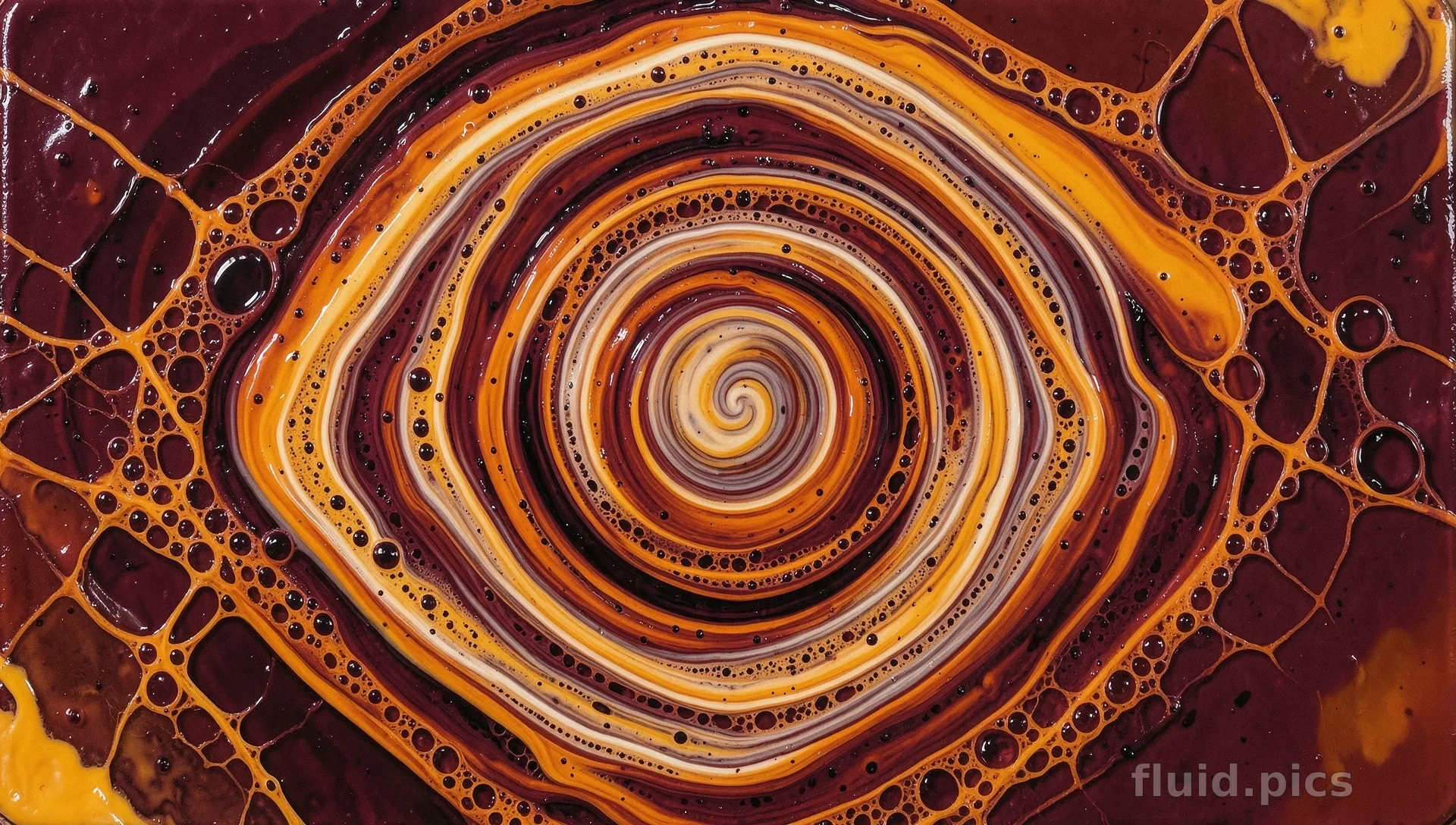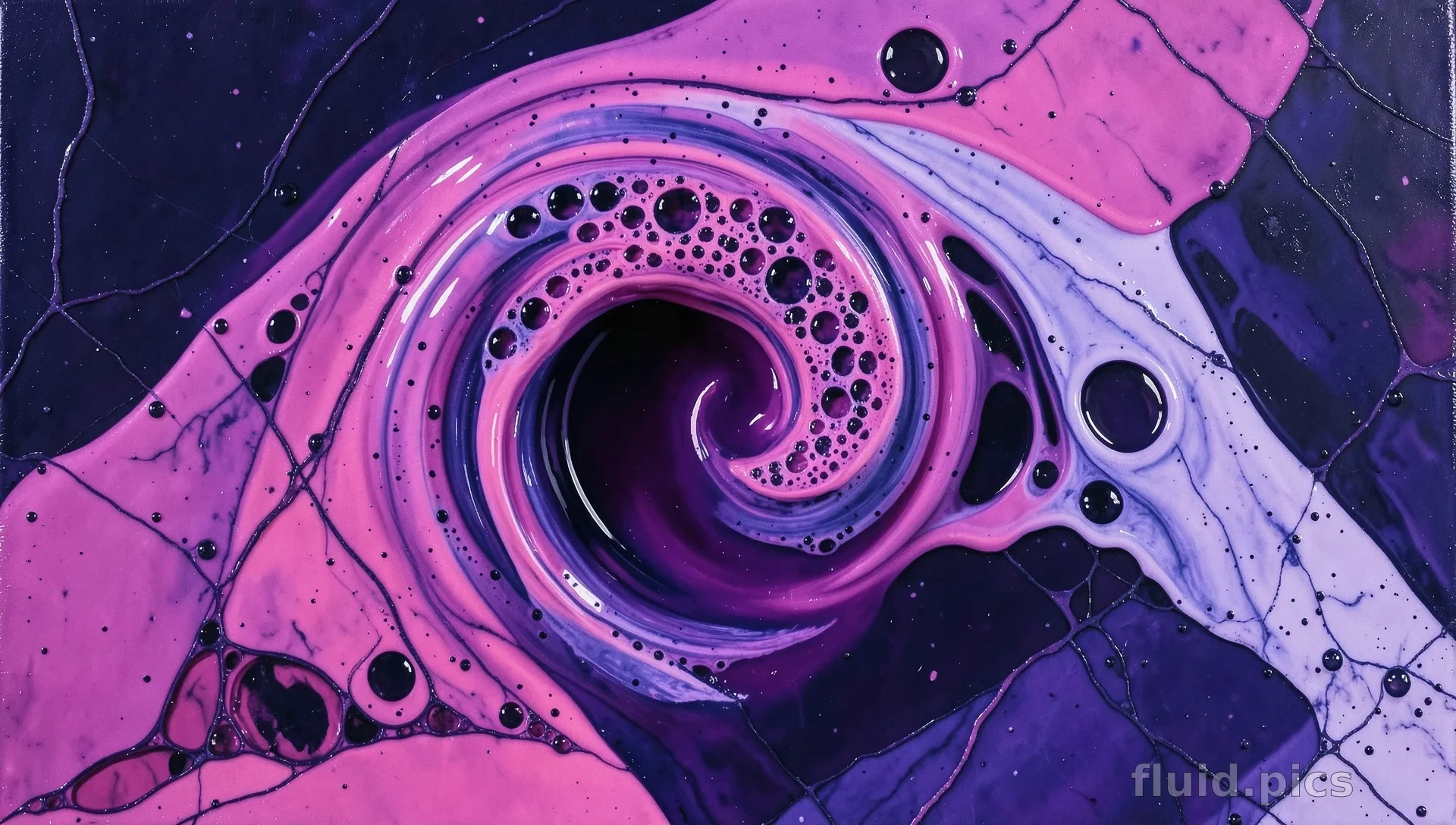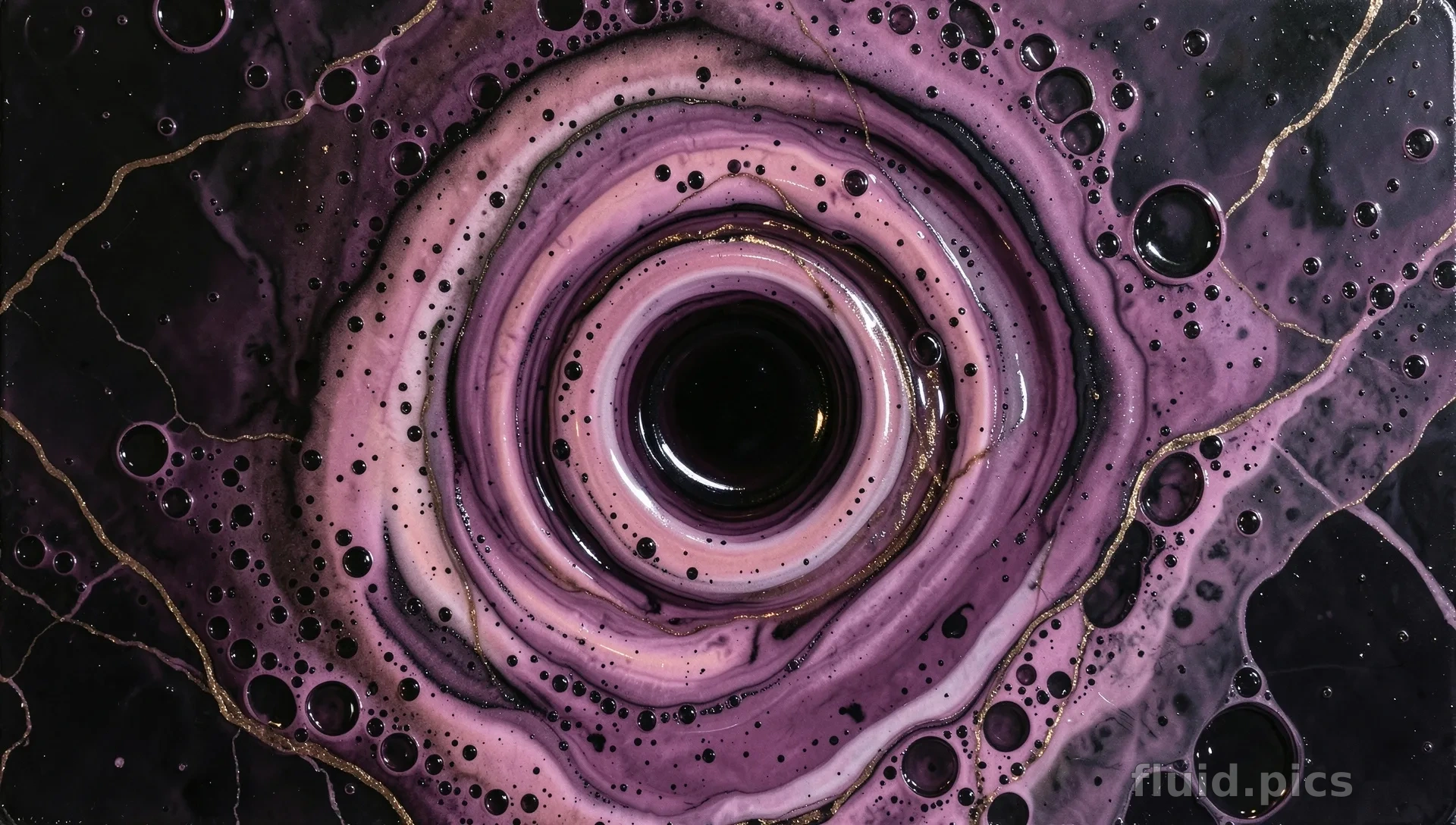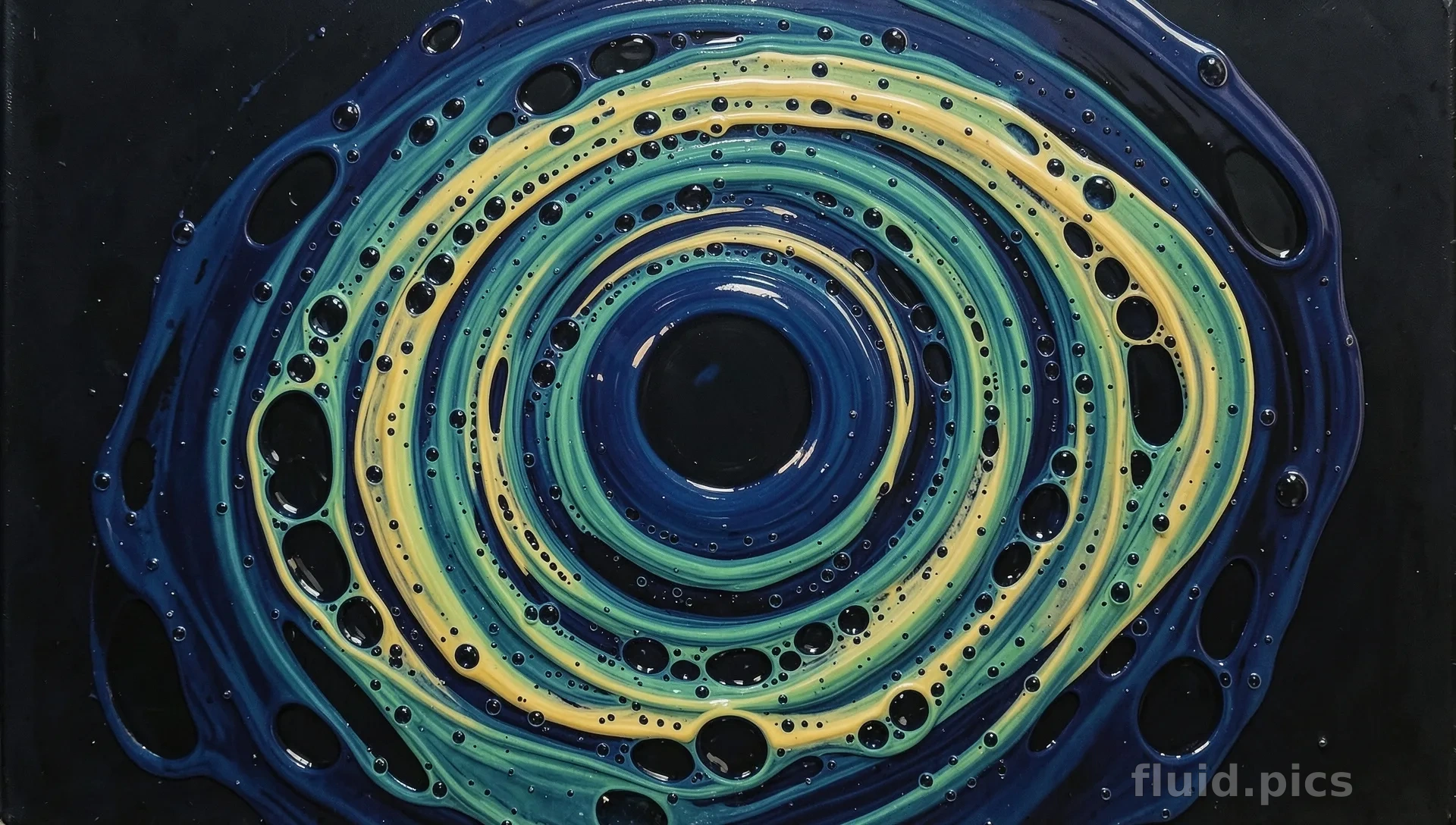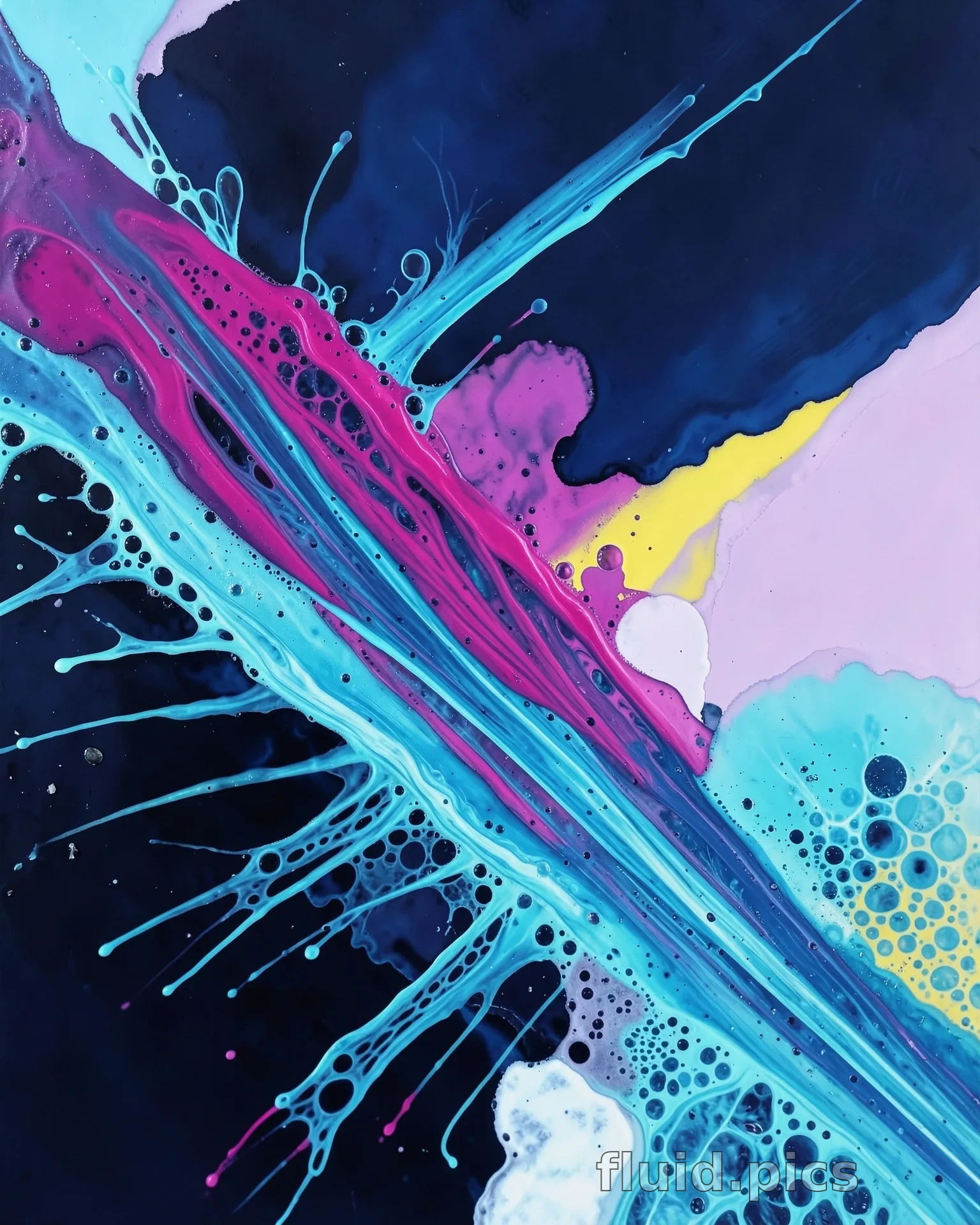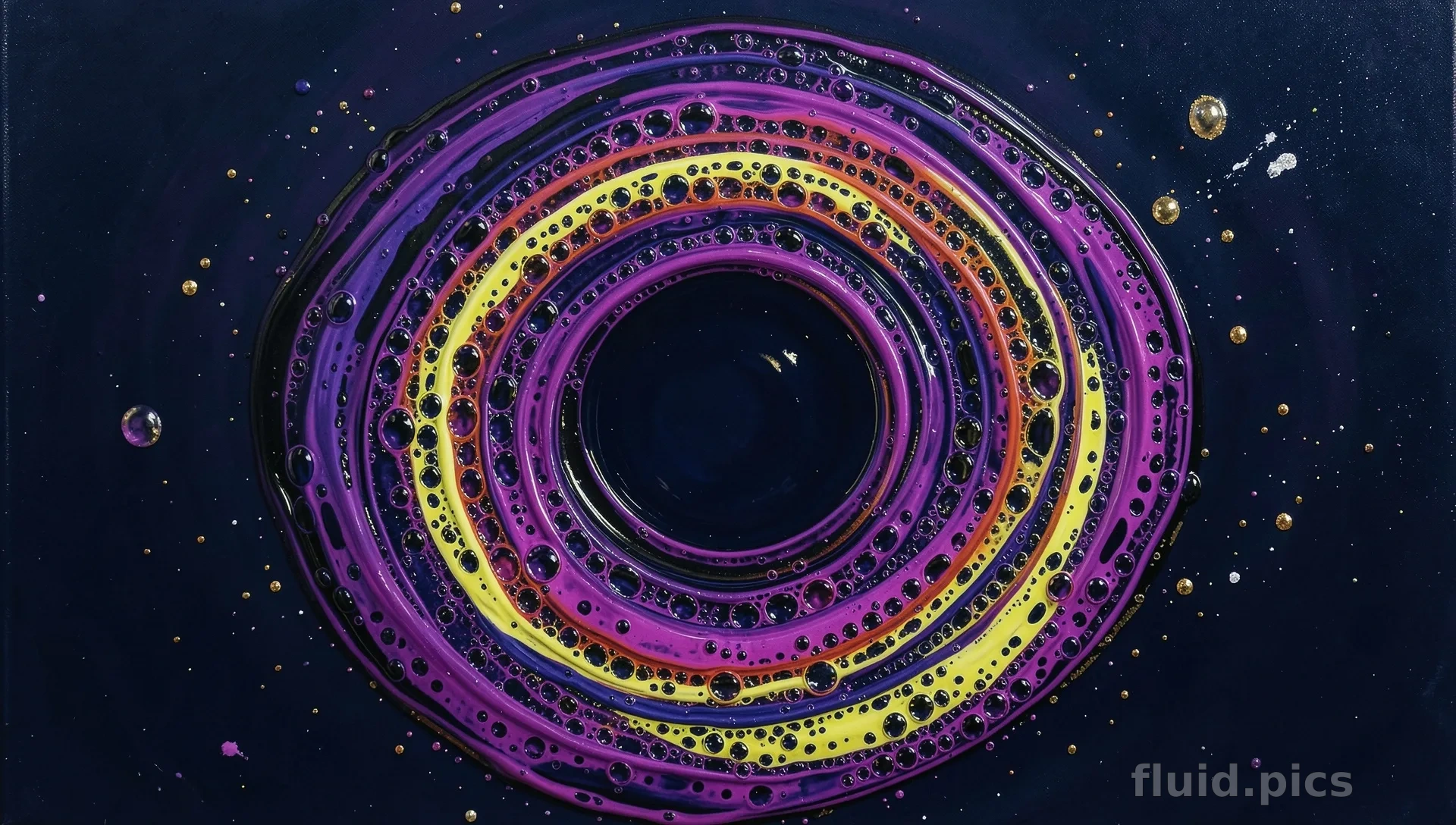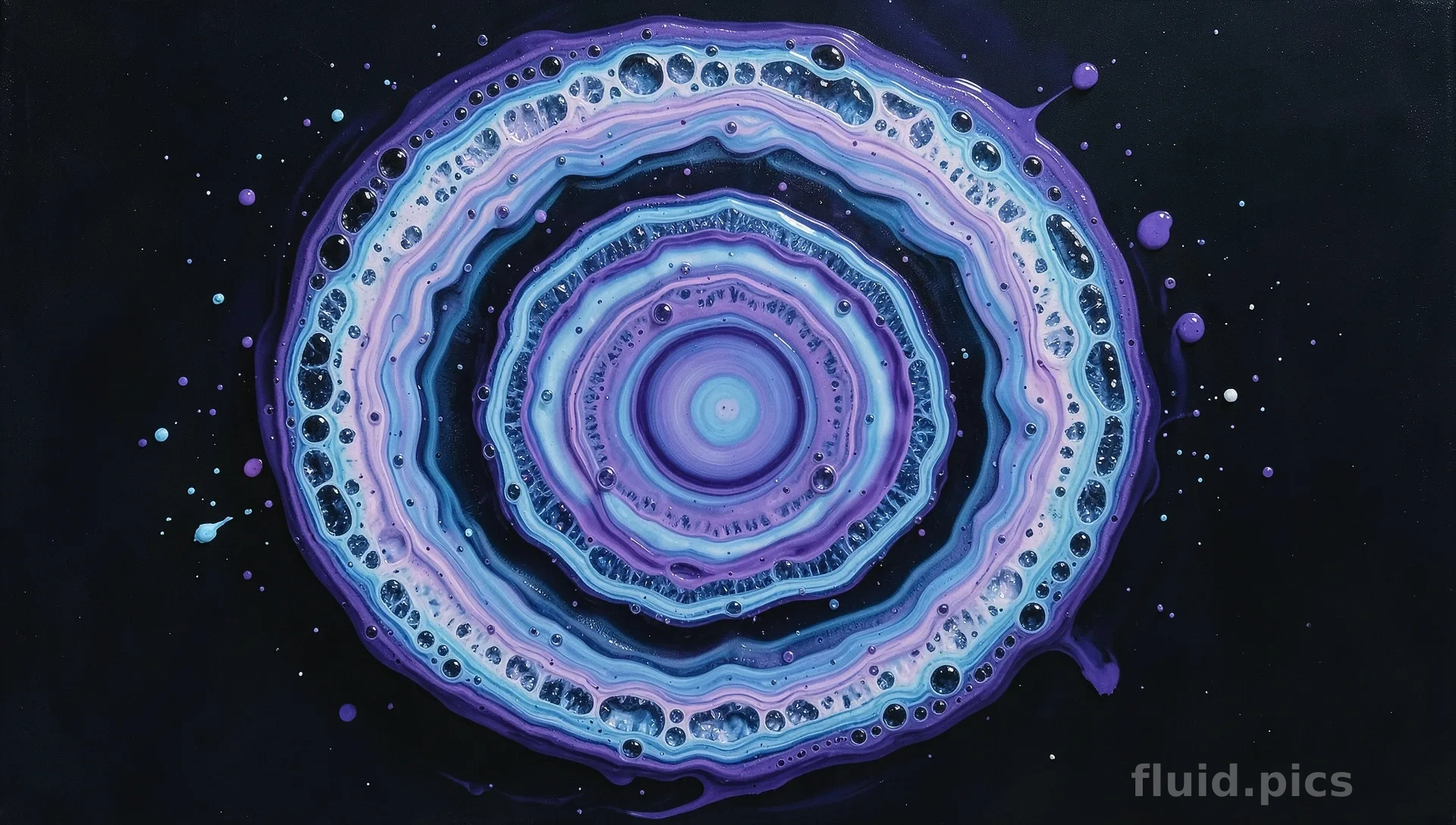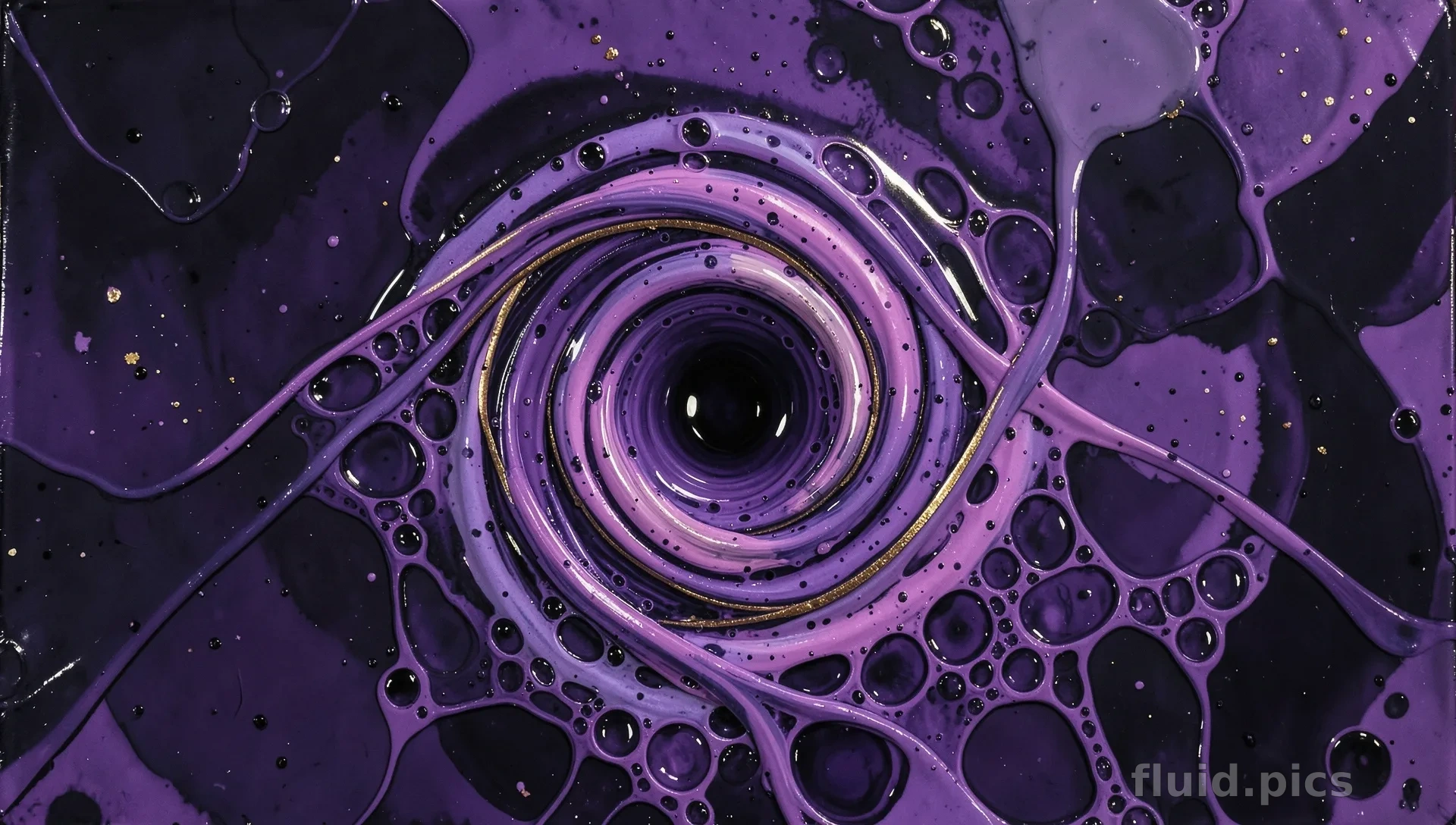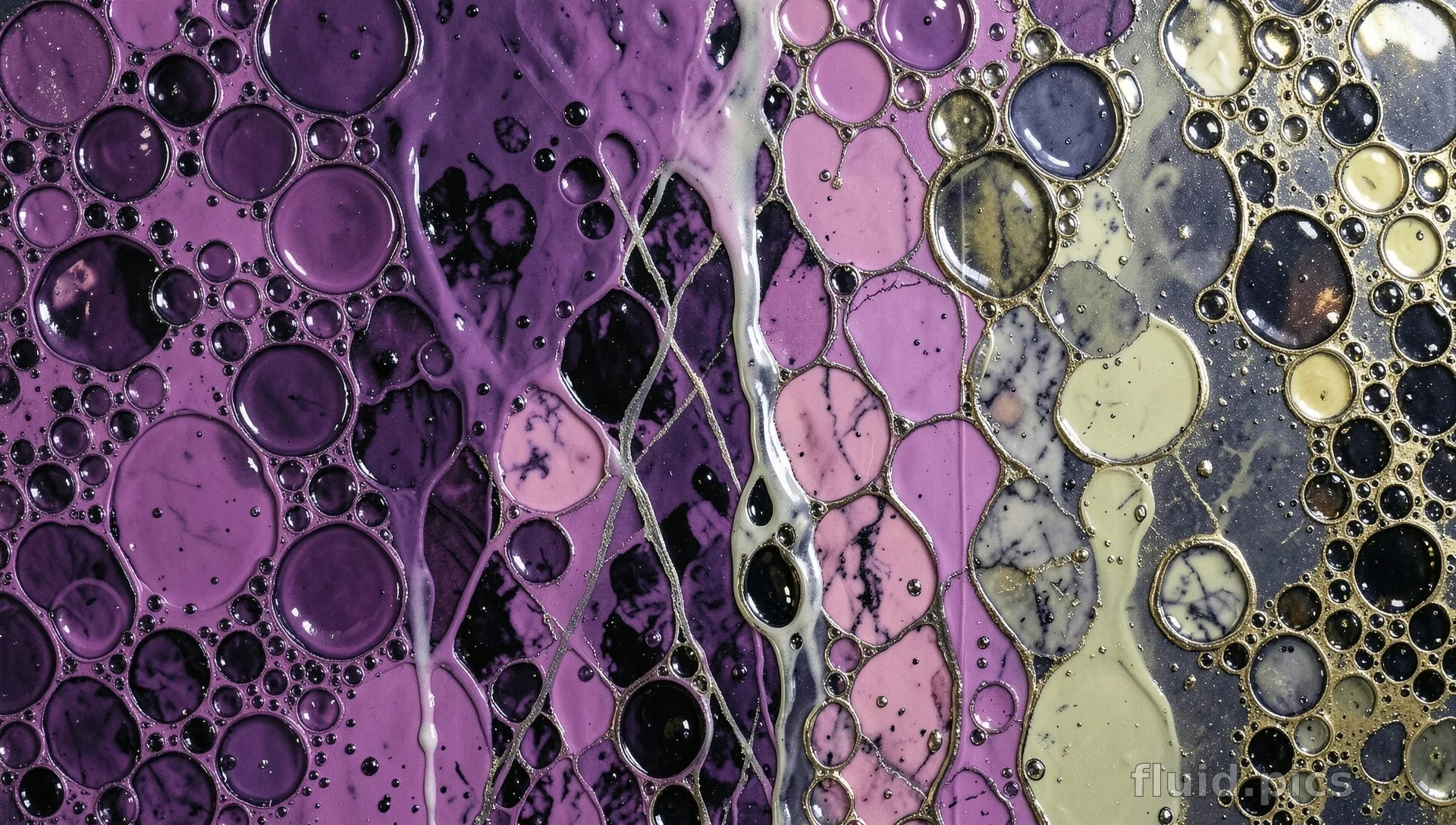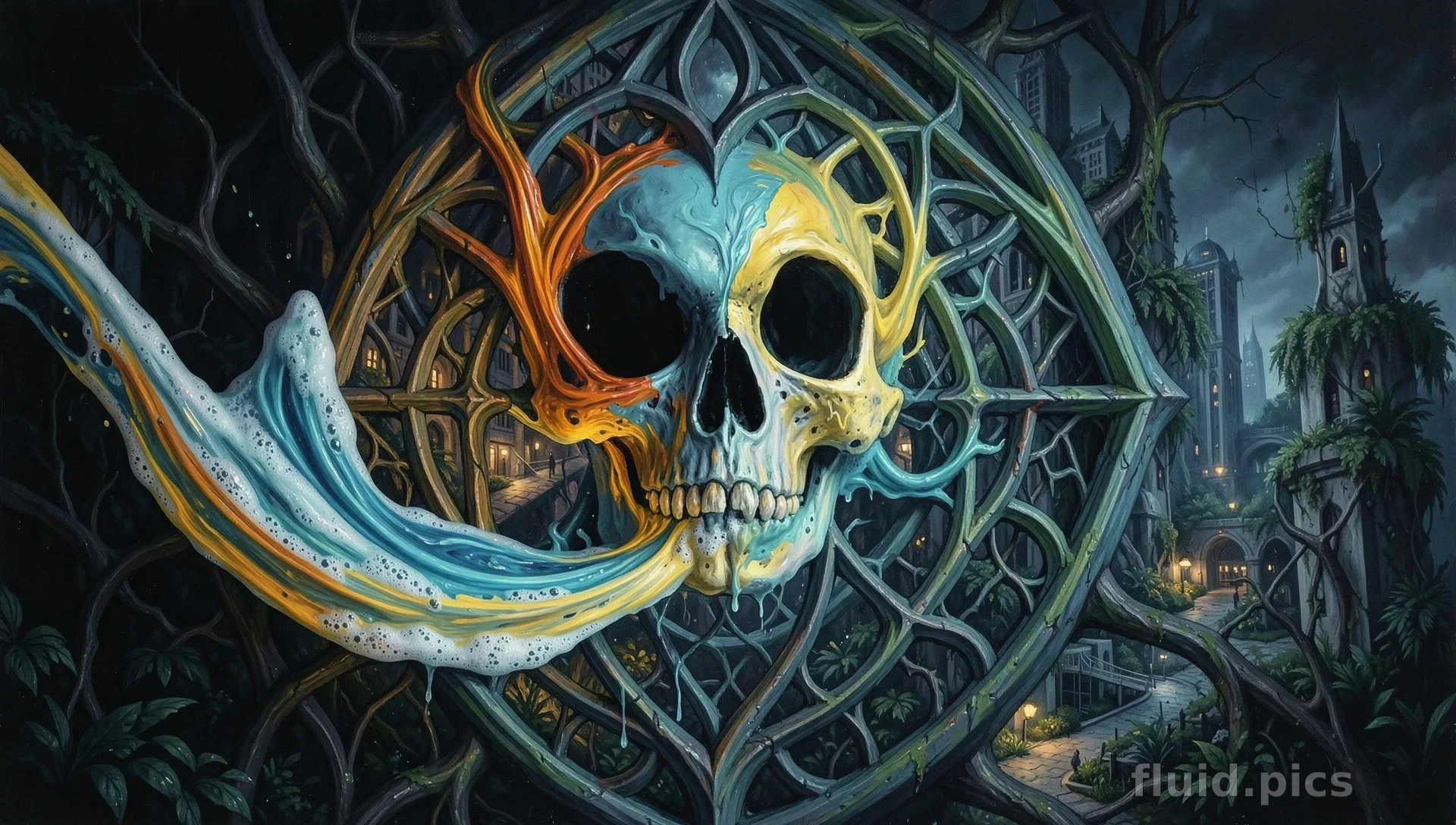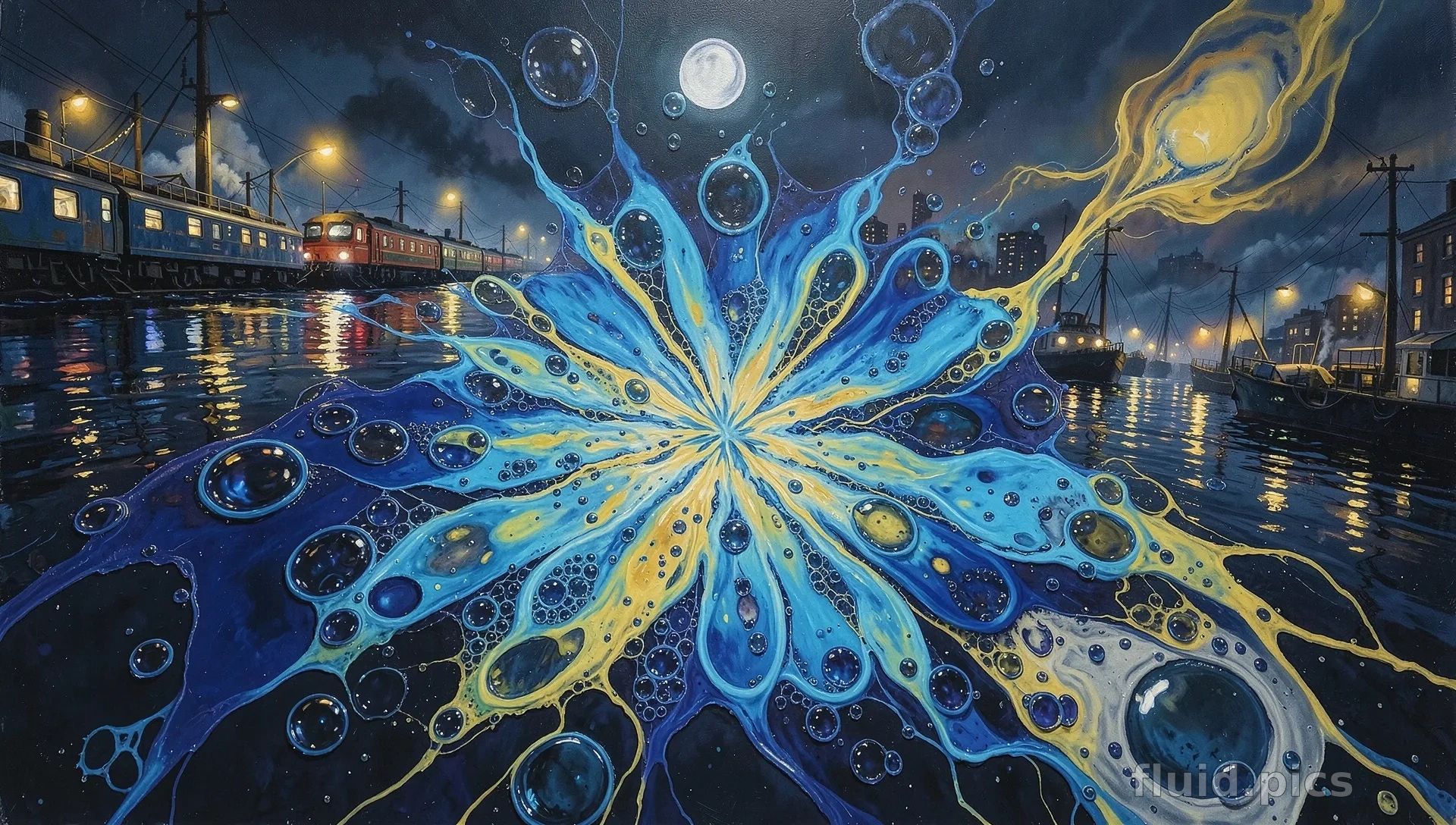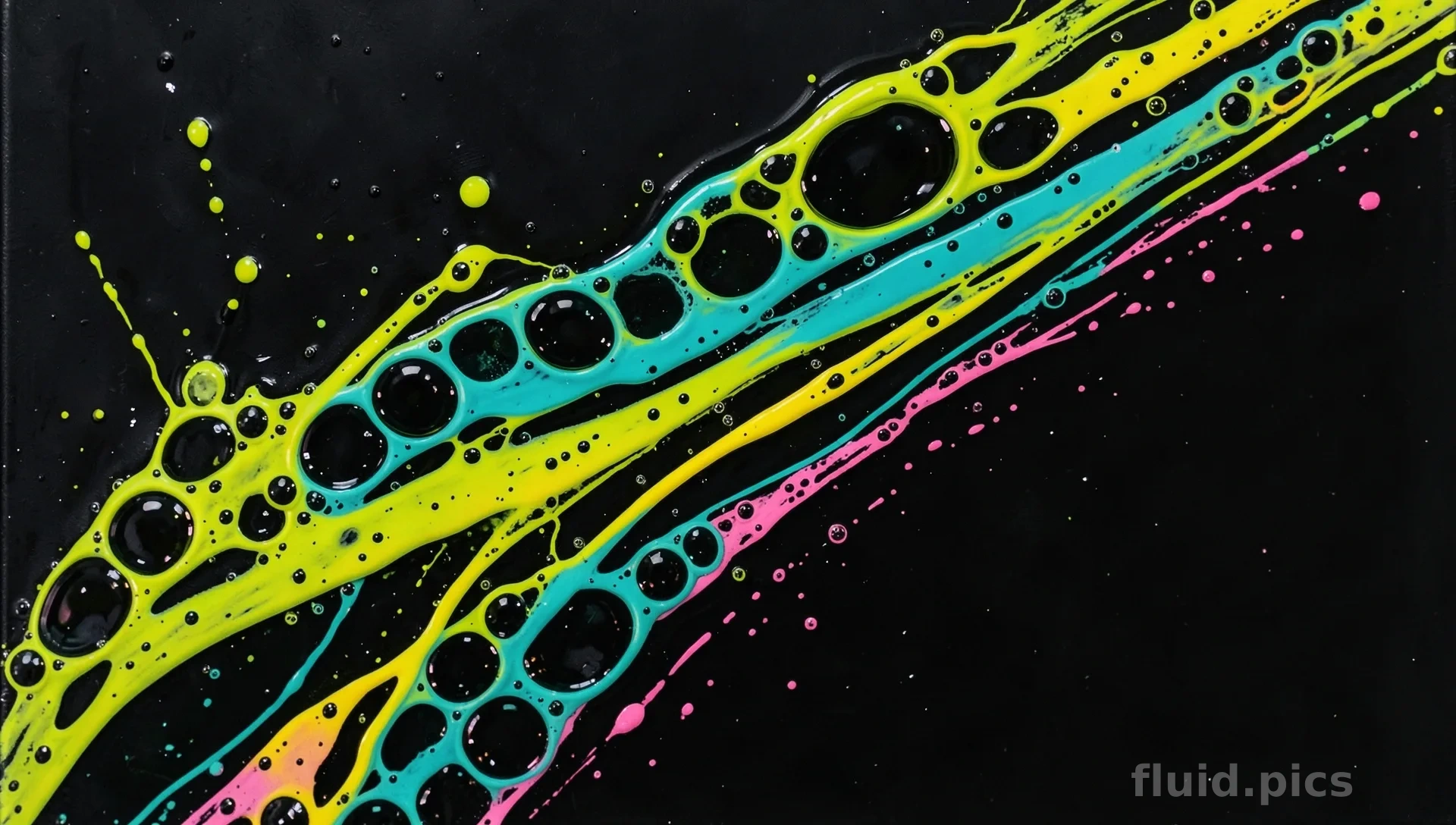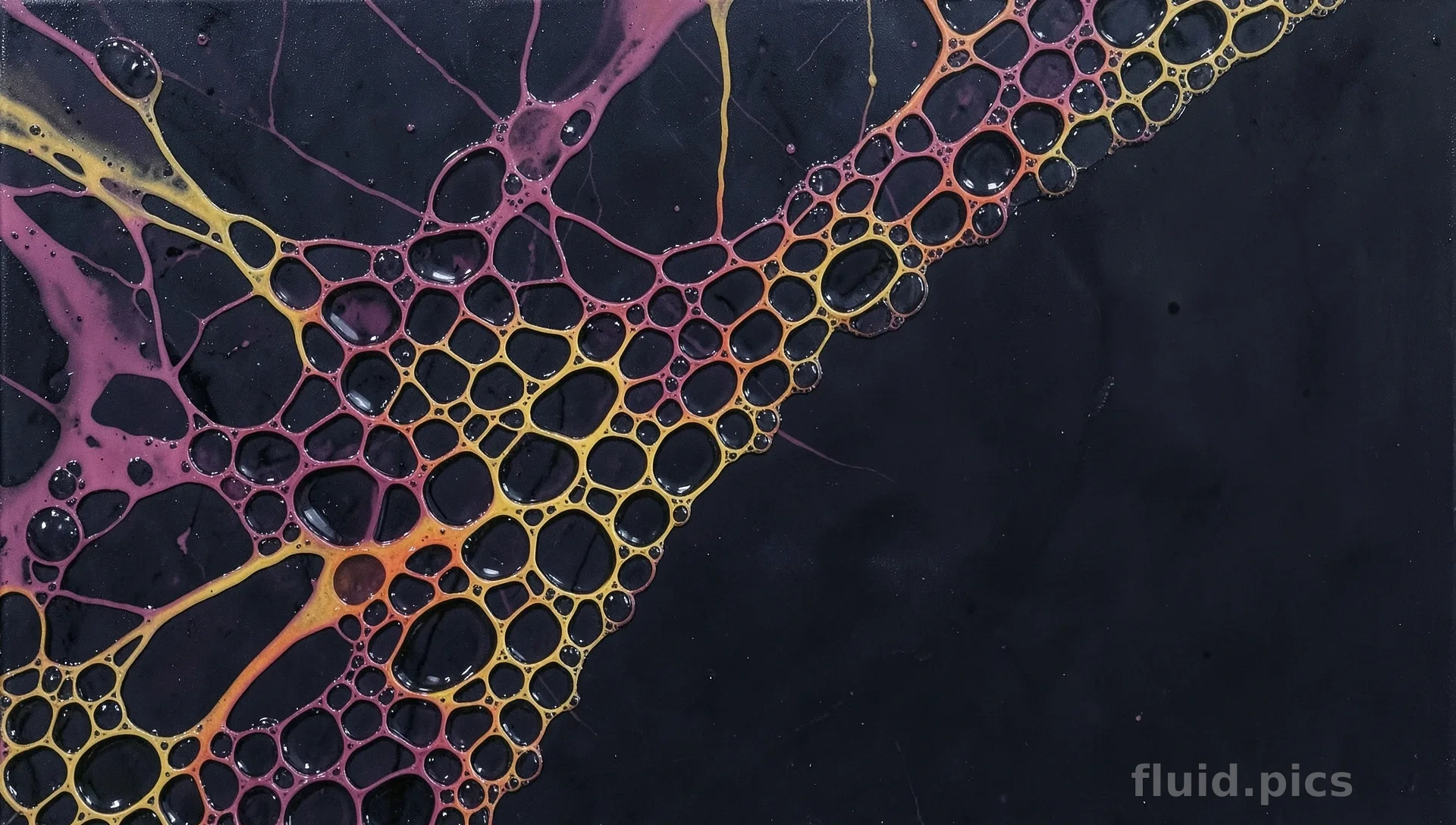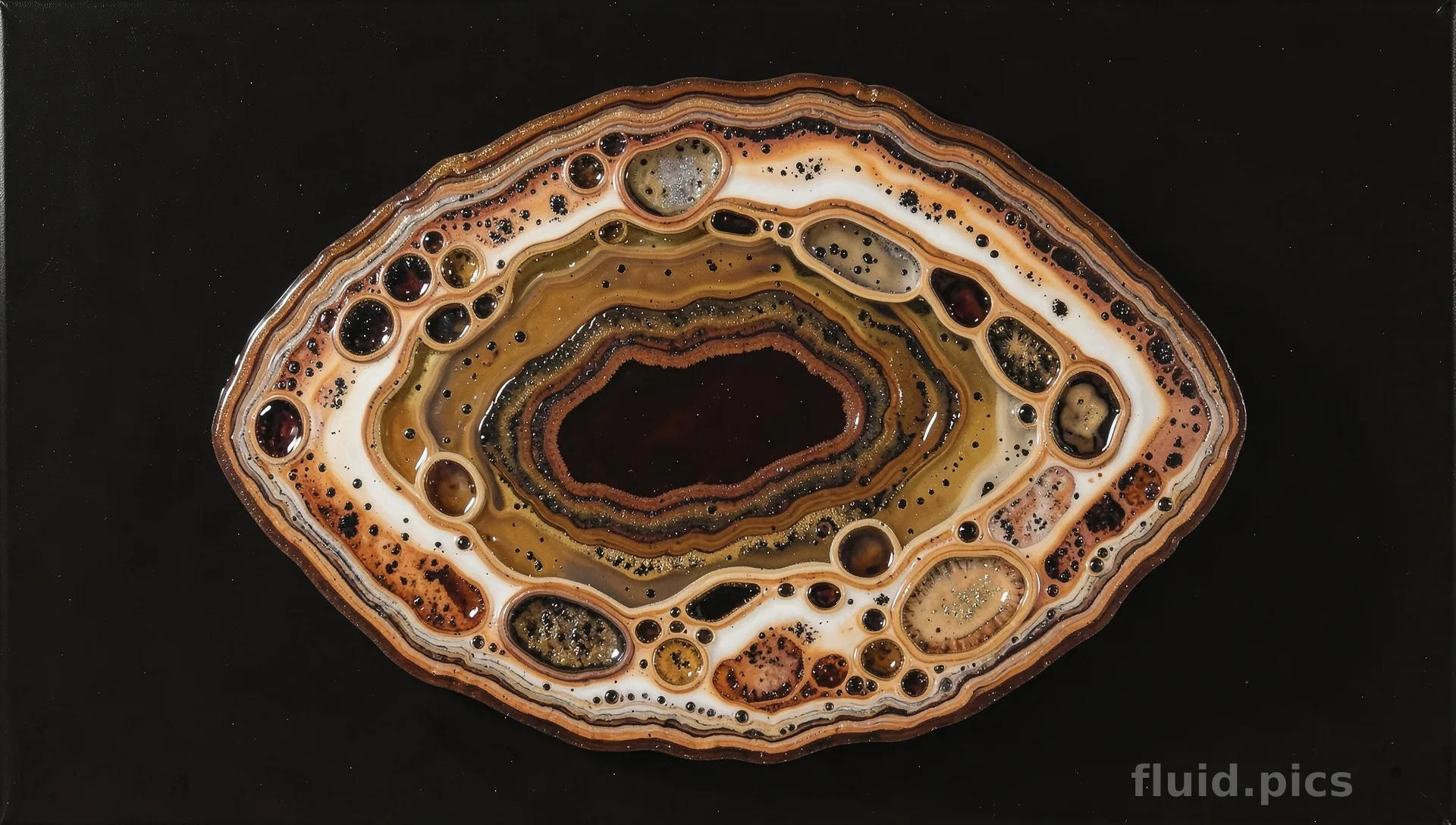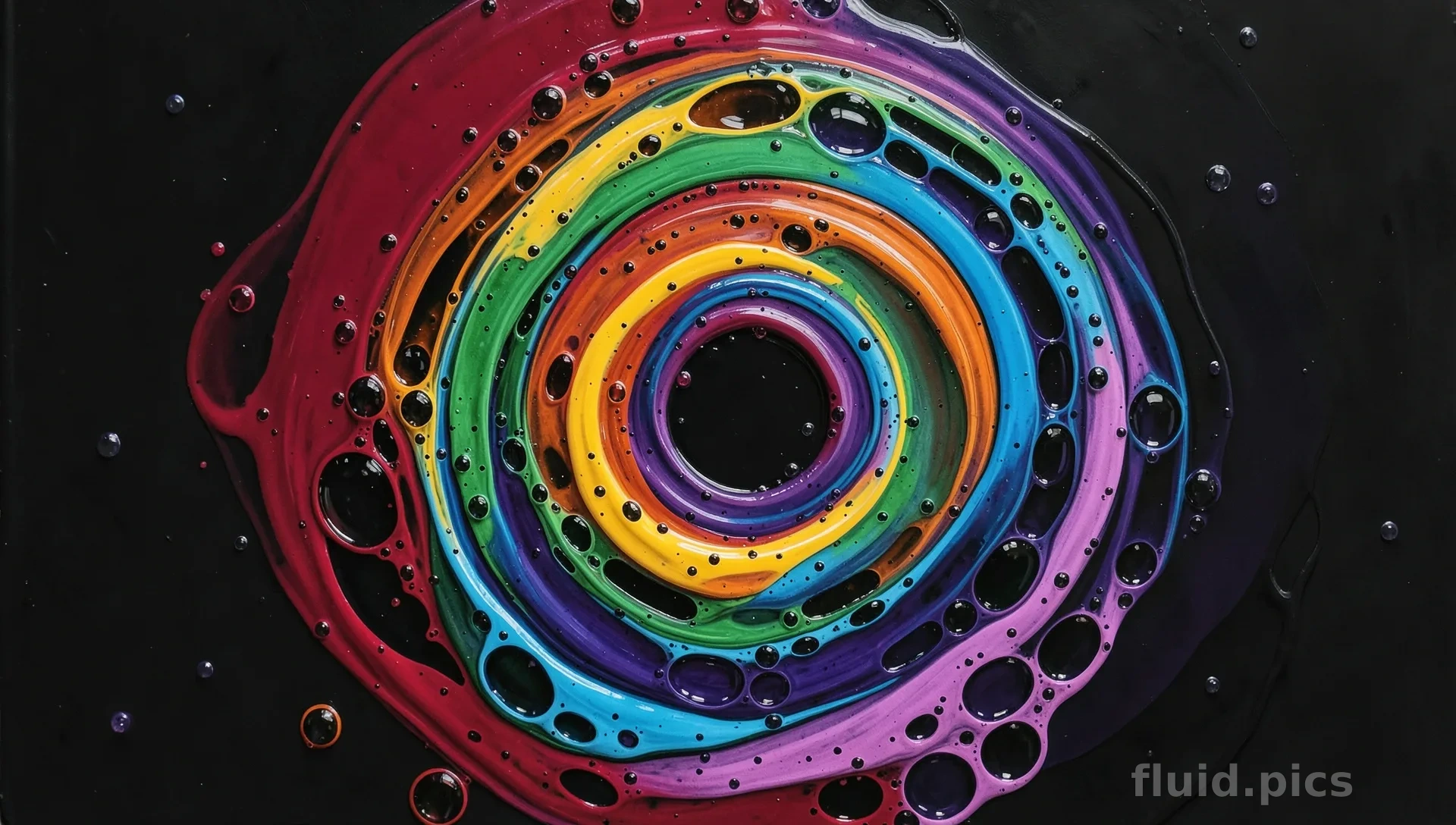
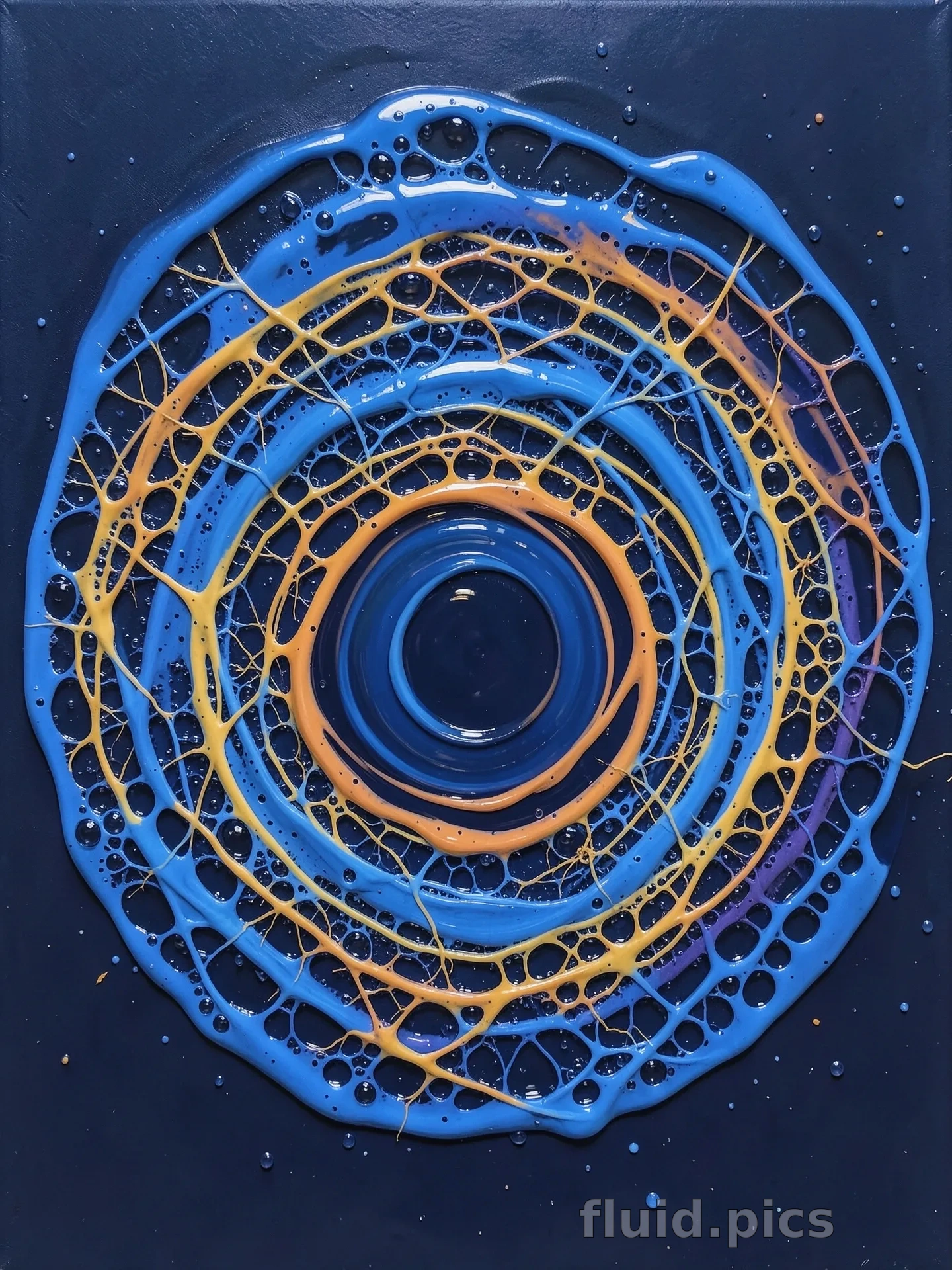
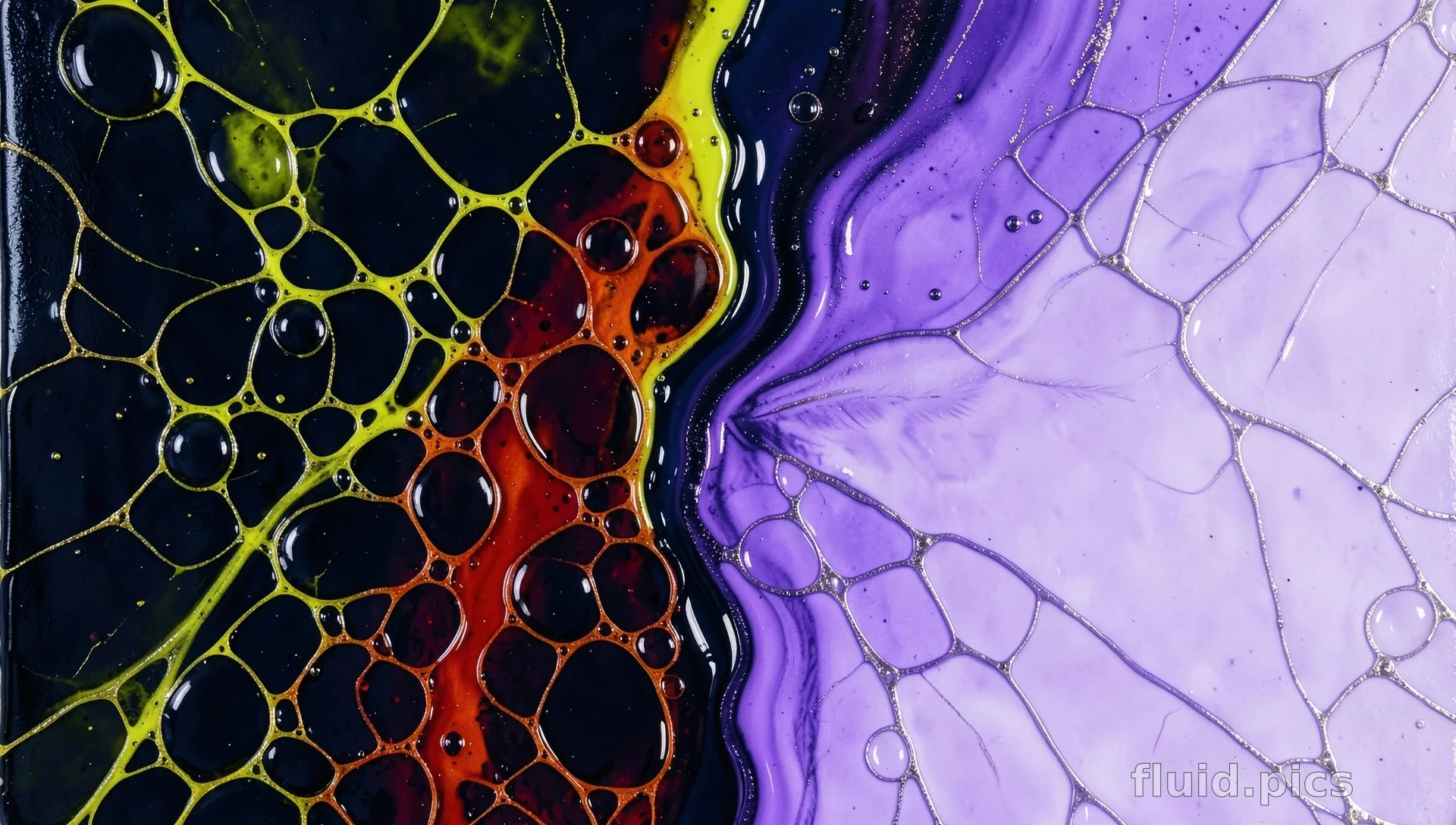
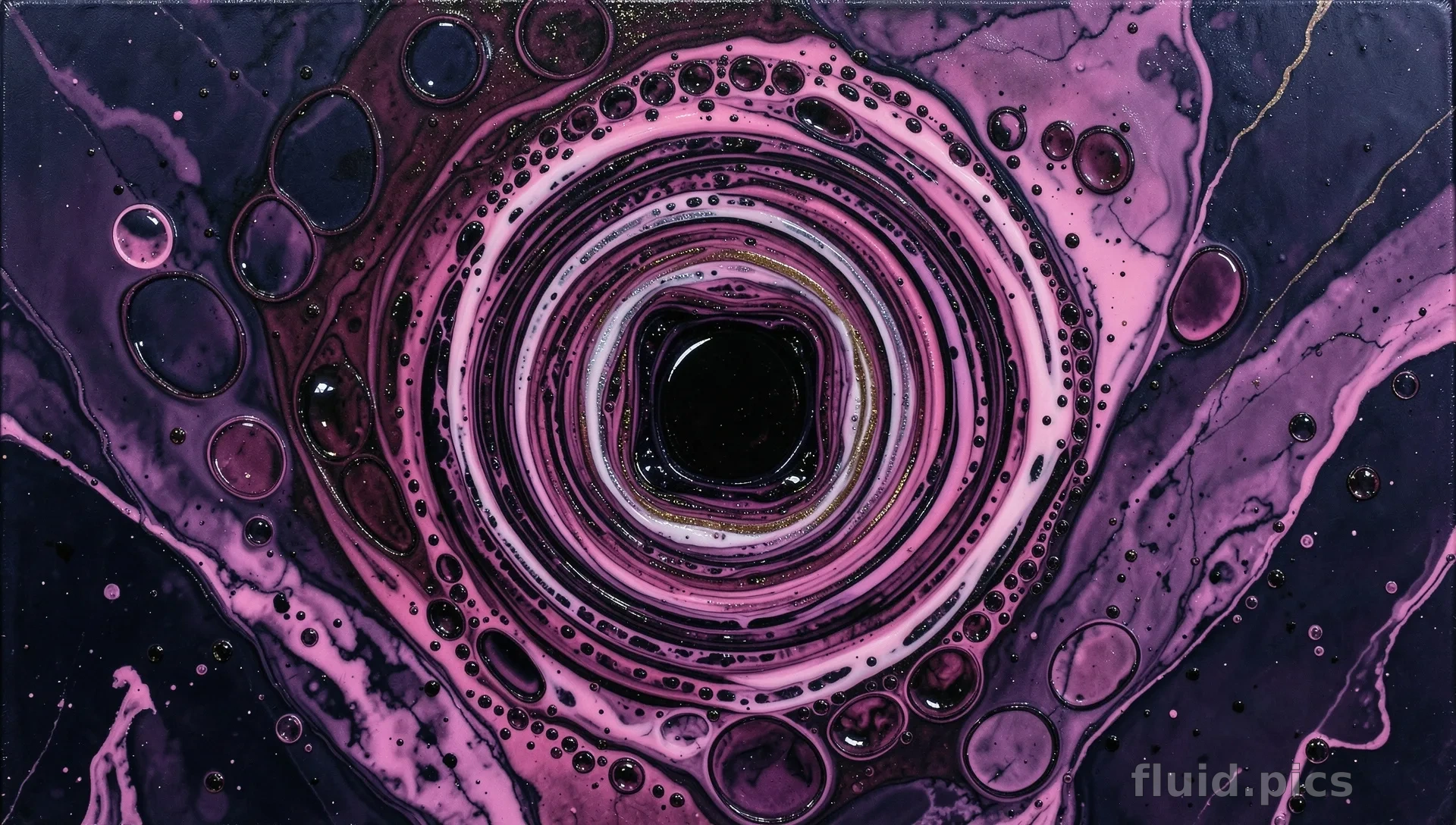
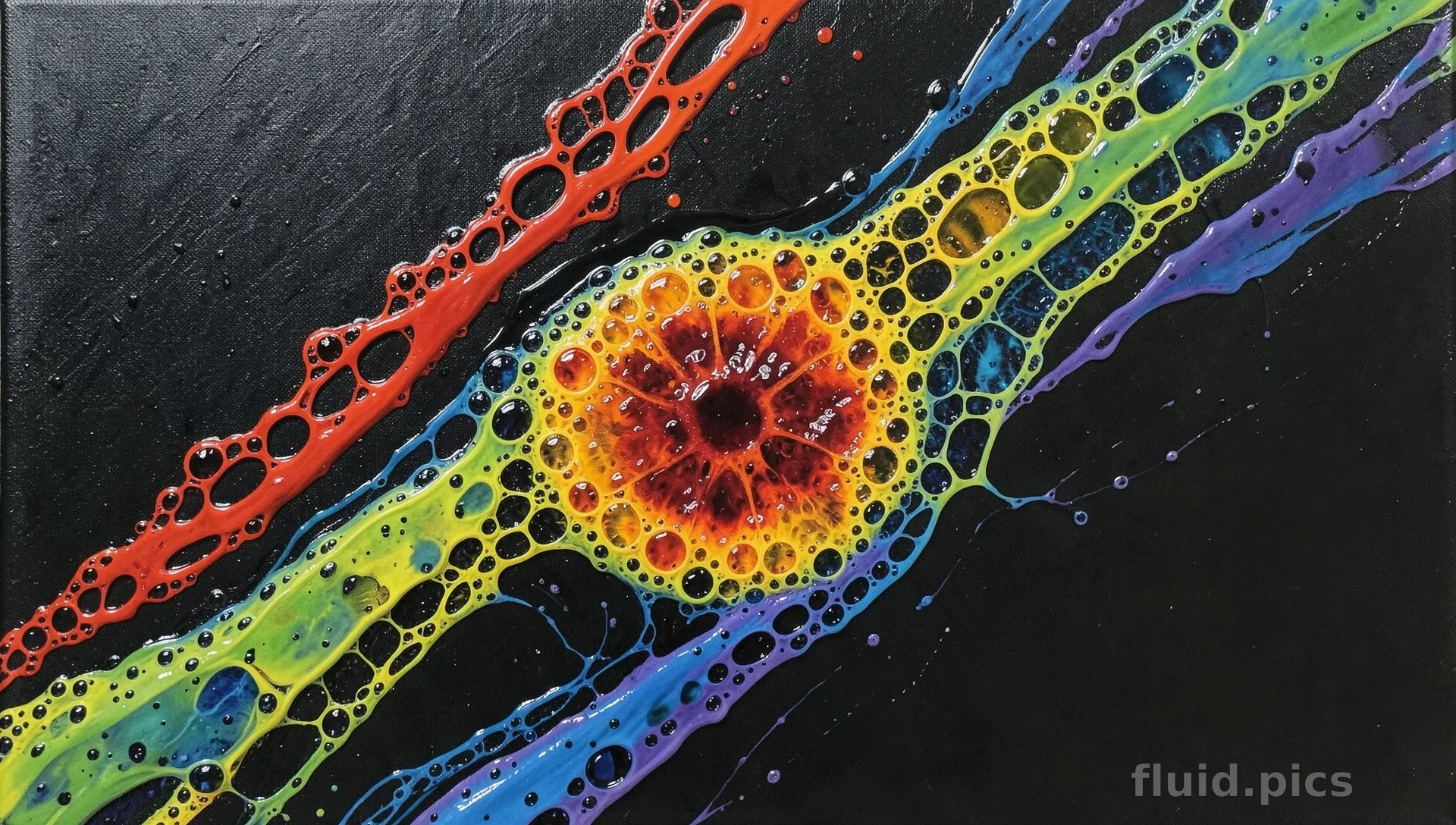
Fluid art is art made through the movement of liquid material. In its physical form, paint is poured, tilted, stretched or allowed to meet other colours across a surface. Gravity, viscosity, surface tension and timing all become part of the image. The artist prepares the conditions, but the material contributes a response that cannot be completely repeated.
The result is often associated with acrylic pouring, cells, marbling, veils of colour and branching flows. Yet fluid art is more than a decorative pattern. It is a way of composing with process: the image records a meeting between intention, material behaviour and chance.
How fluid art works
Different paint densities and additives affect how colours move. A slow tilt can pull a field into long ribbons; a sudden turn can make edges fold and separate. When layers interact, they may open into cells, lace-like structures or translucent gradients. Each adjustment changes the balance between control and release.
An artist therefore watches closely. The decisive moment may be the placement of an initial colour, the angle of a surface or the choice to stop before a pattern becomes too uniform. Fluid art rewards this attention because its most convincing forms often arise at the edge between order and disruption.
What viewers see in flowing form
Fluid compositions invite associations without fixing them. A surface may resemble aerial terrain, ocean currents, stone, biological tissue, smoke or a distant weather system. These images do not need to be literal. Their force comes from movement made visible: colour appears to keep spreading even after the work has become still.
That is why fluid art can feel both immediate and spacious. Close up, it offers small events at the edge of a cell or the boundary between two tones. From a distance, those events combine into a broader rhythm of weight, direction and depth.
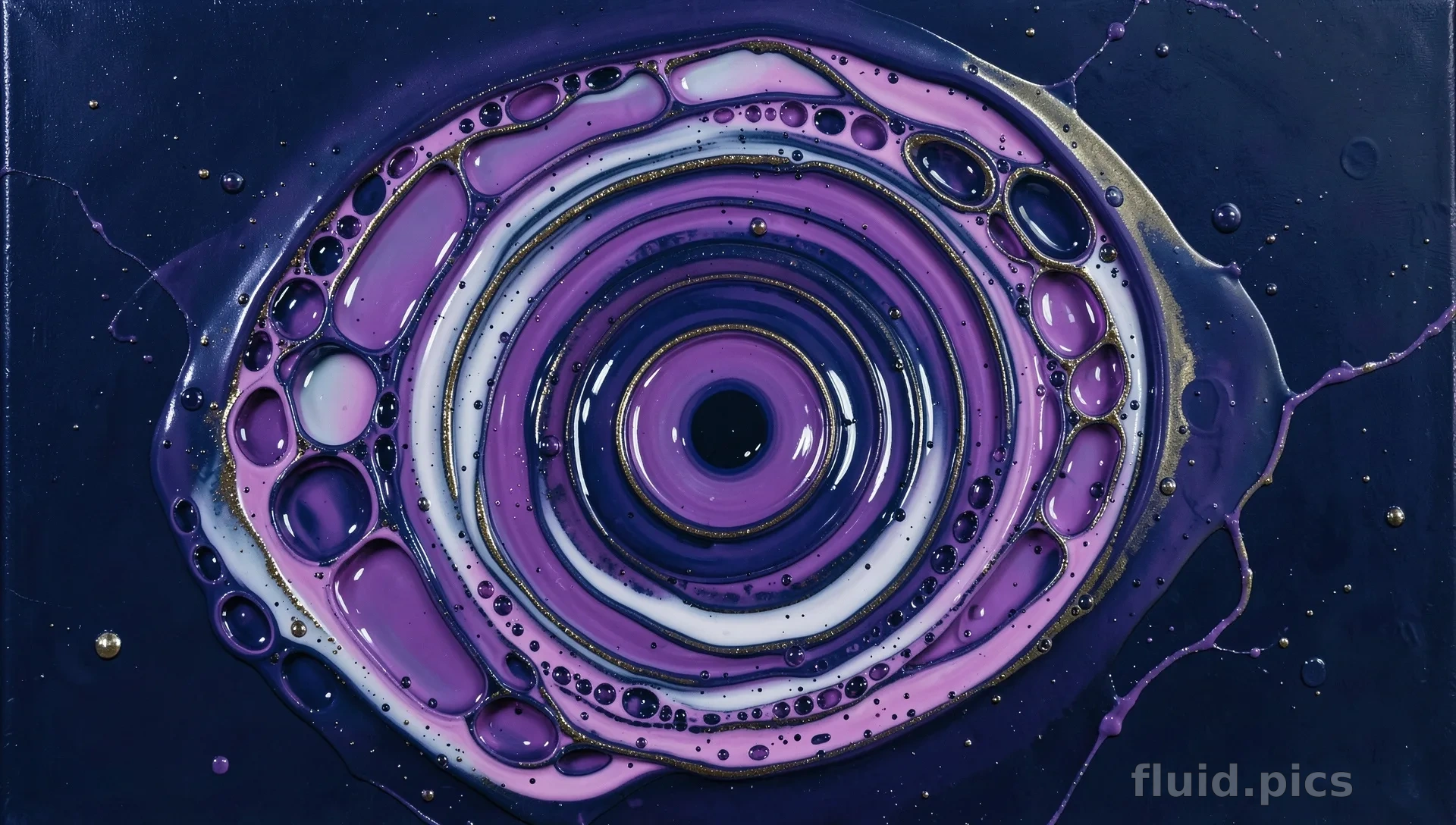
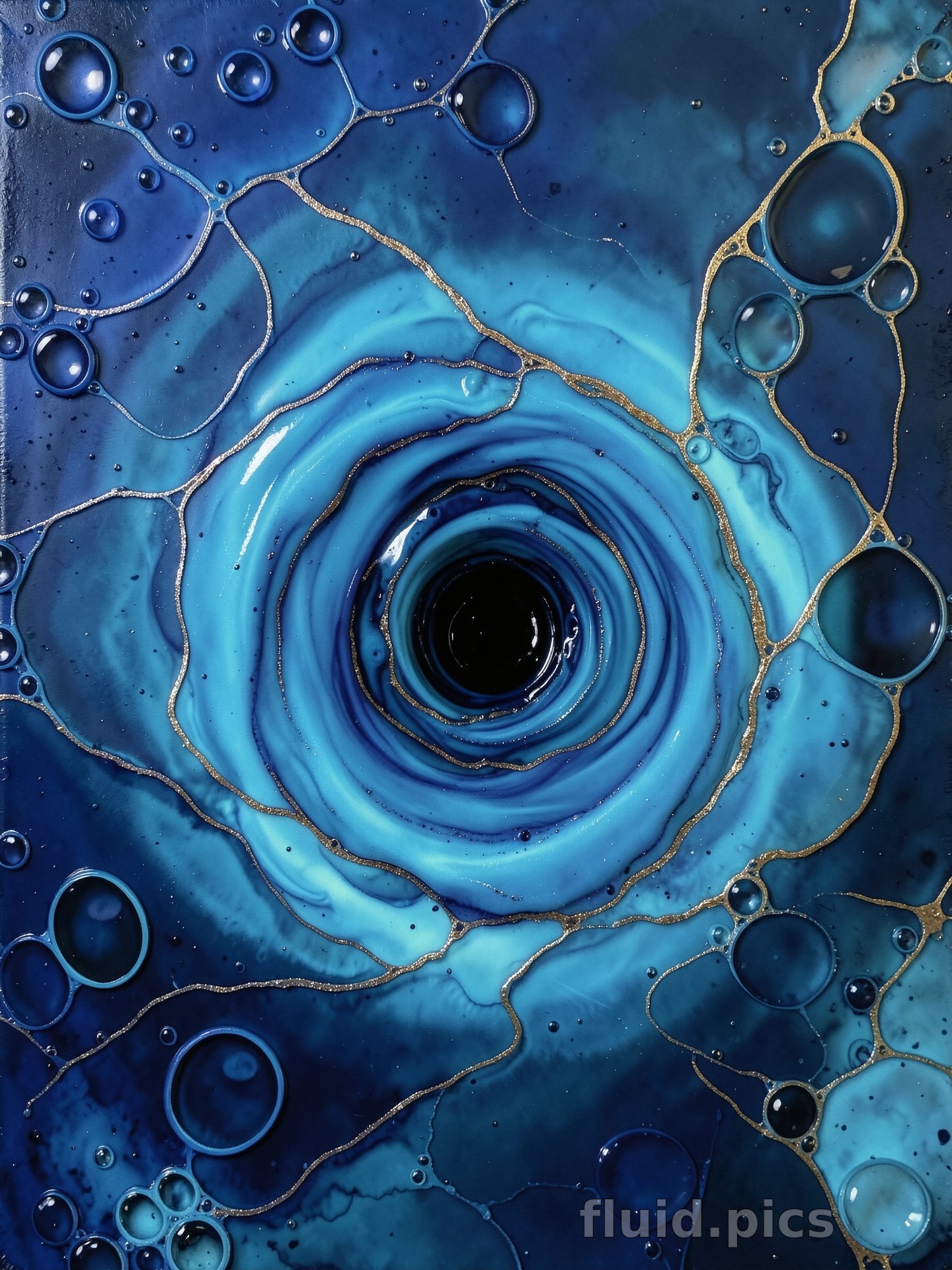
Physical fluid art and digital interpretation
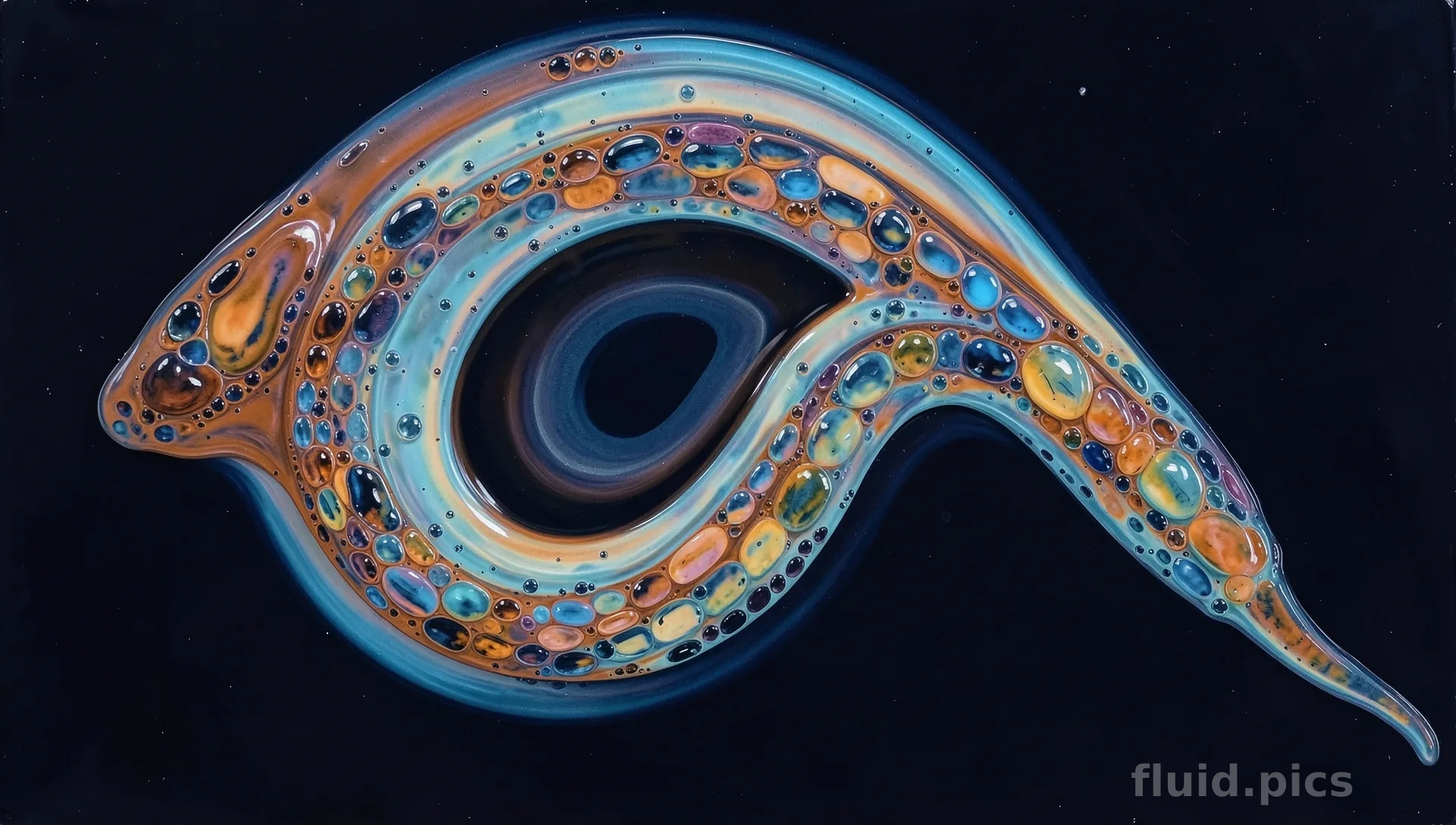
Digital fluid art does not copy paint stroke for stroke. It can reinterpret the same visual logic through simulations, algorithms and hybrid image processes. A digital system can model flow, diffusion, turbulence or cellular structures; an artist can then choose the colour relationships, scale and moment that give the image its character.
The relationship is similar to that between a landscape and a map. The tools are different, but each can reveal movement and structure. Physical pouring makes material behaviour visible directly. Digital practice makes the system adjustable, repeatable and open to combinations with other visual languages.
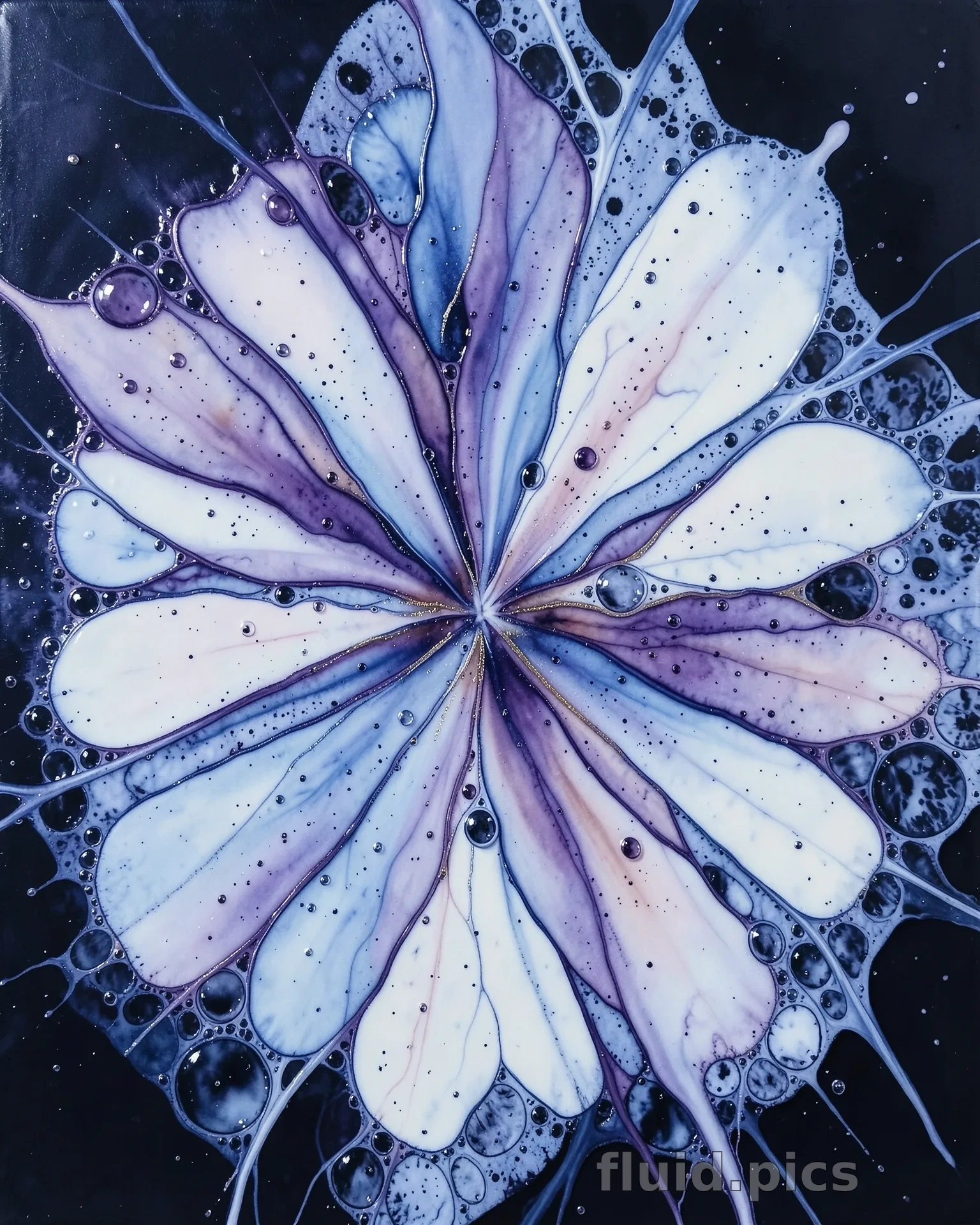
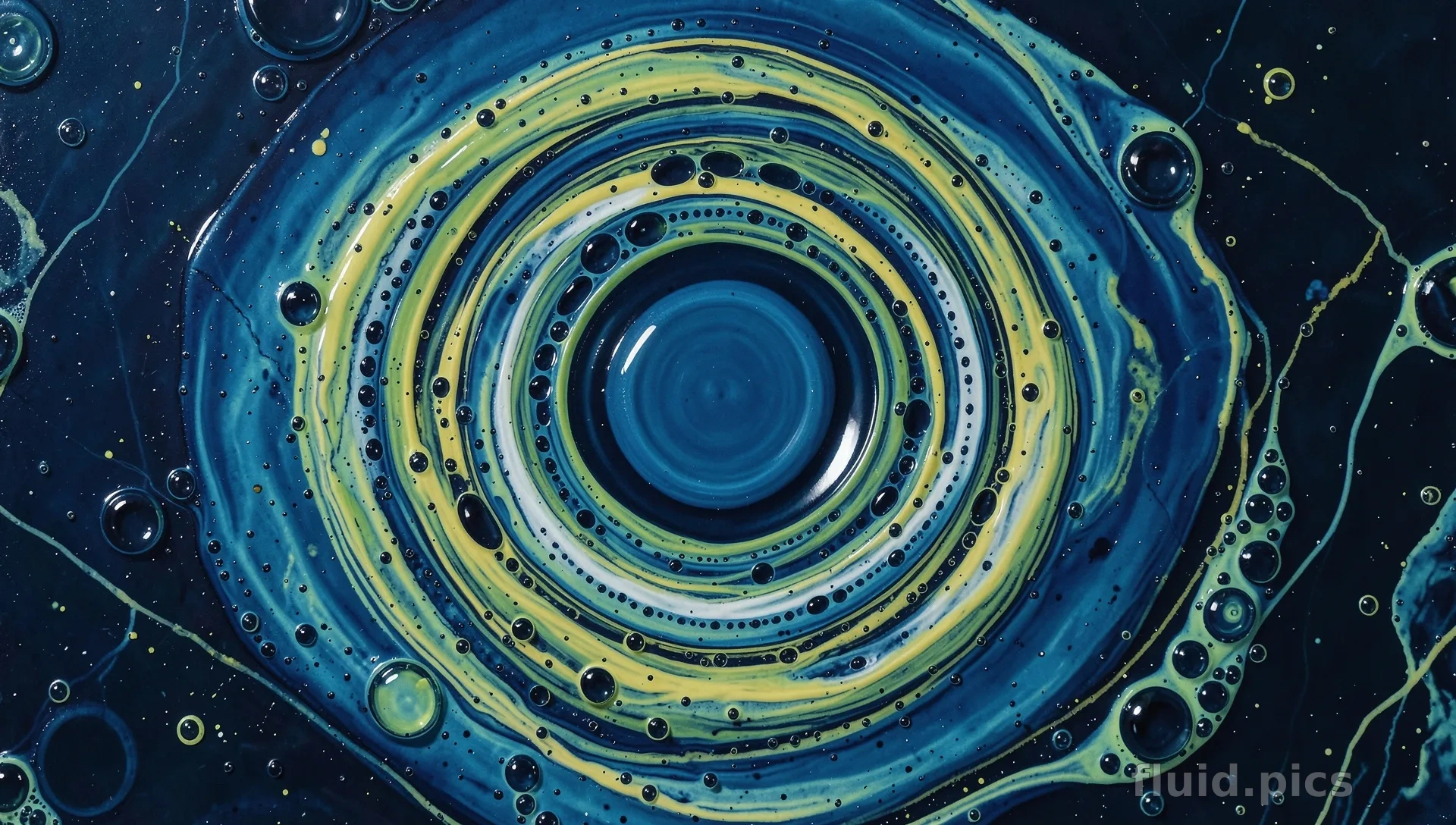
Fluid art and generative systems
Fluid art naturally connects with generative art. In both, the artist works with a process that can produce variation. A physical pour and a digital simulation are not identical, but both require a balance between setting conditions and responding to what happens next.
In Fluid Studio, flow is treated as a compositional instrument. A user can explore colour, density, movement and texture, then keep the result that feels resolved. The image is not valuable because it is unpredictable; it is valuable because a person recognises a particular balance within that unpredictability.
Looking at fluid art
When viewing a fluid composition, follow the path of a colour rather than trying to name every shape. Notice where it begins, where it thickens, where it becomes transparent and where another colour changes its course. Then step back and see how those local events make a larger structure.
For a wider context, read What Is Abstract Art?, or visit Fluid Art and the Gallery to explore flowing visual systems in finished digital works.