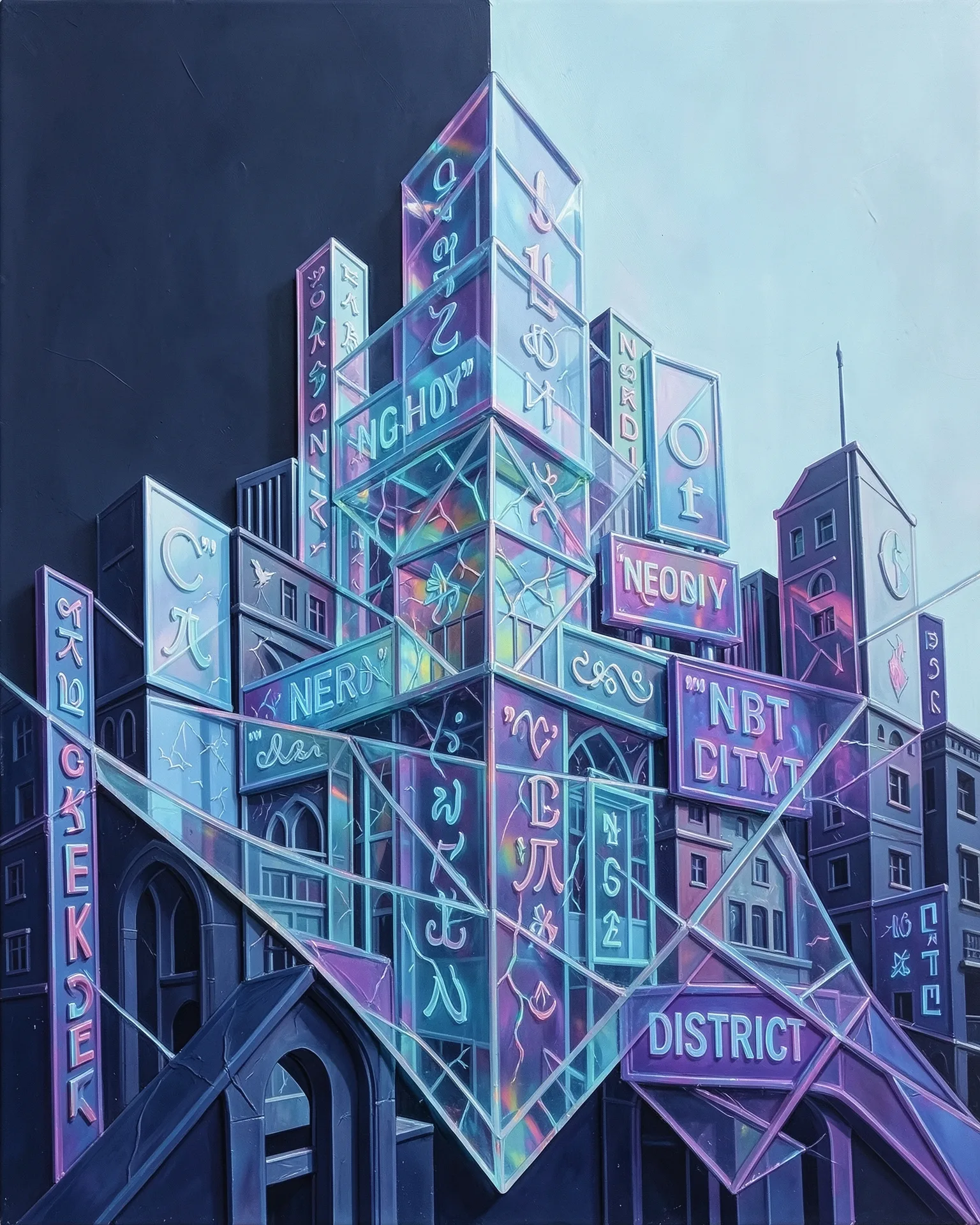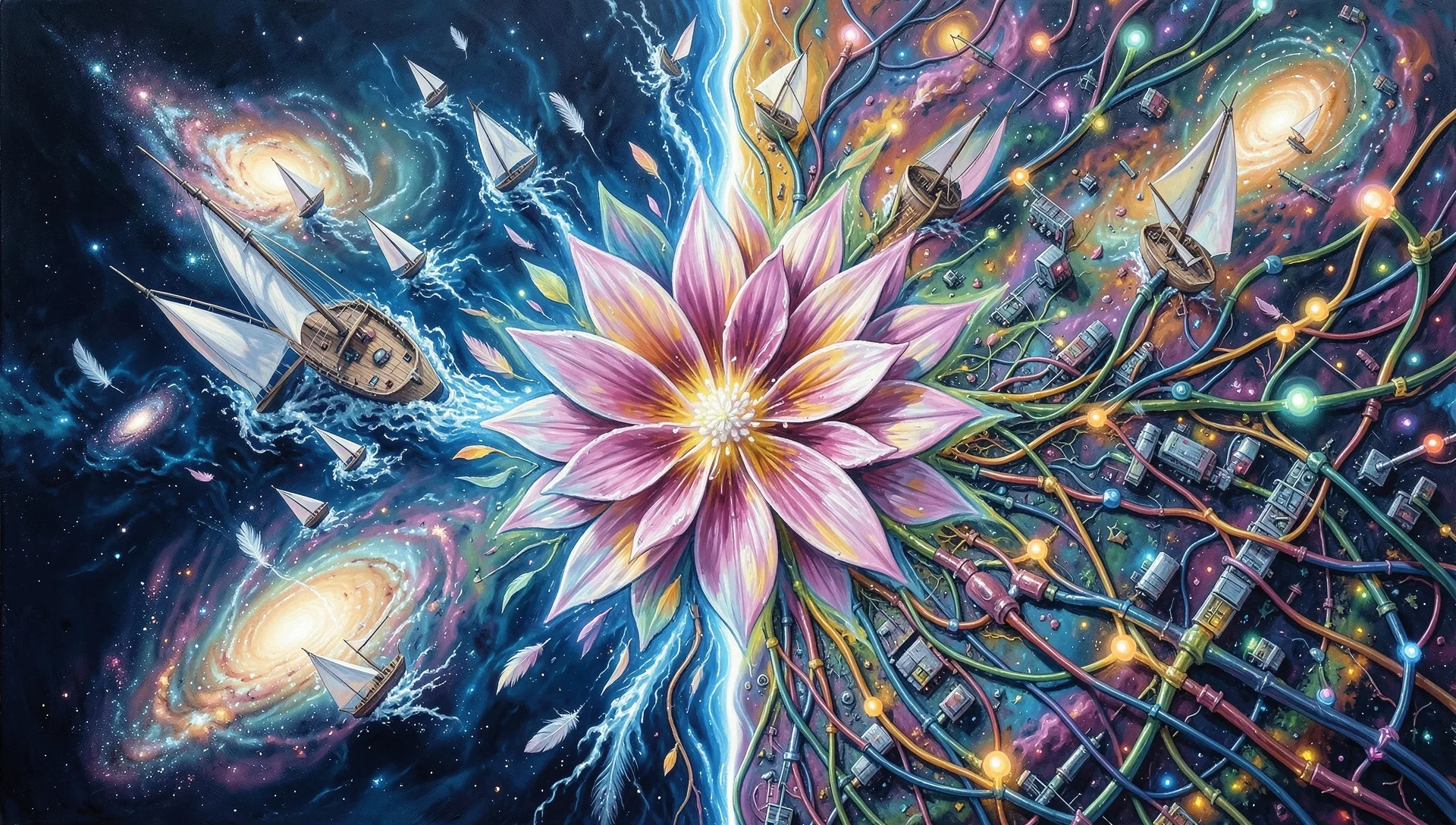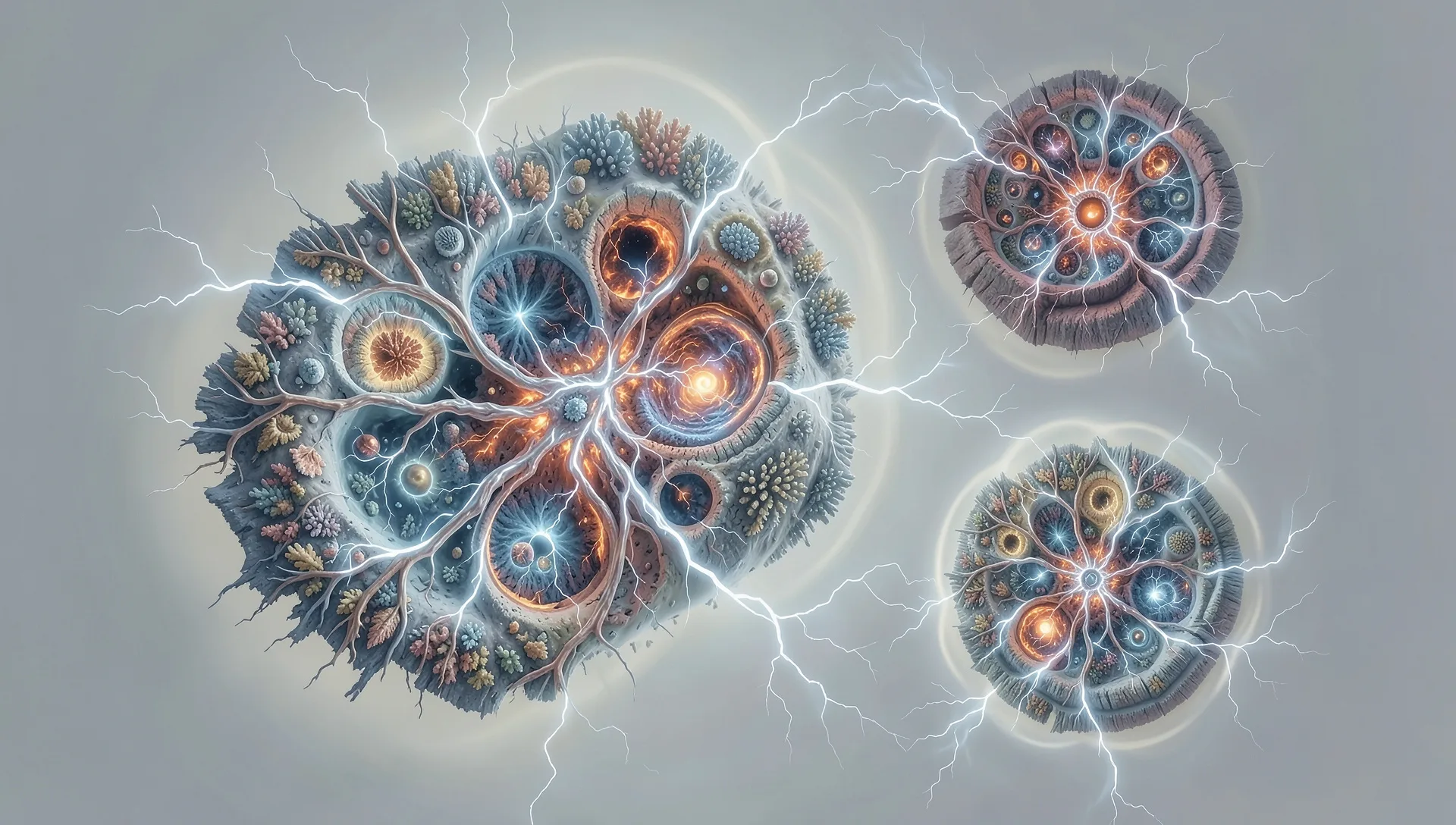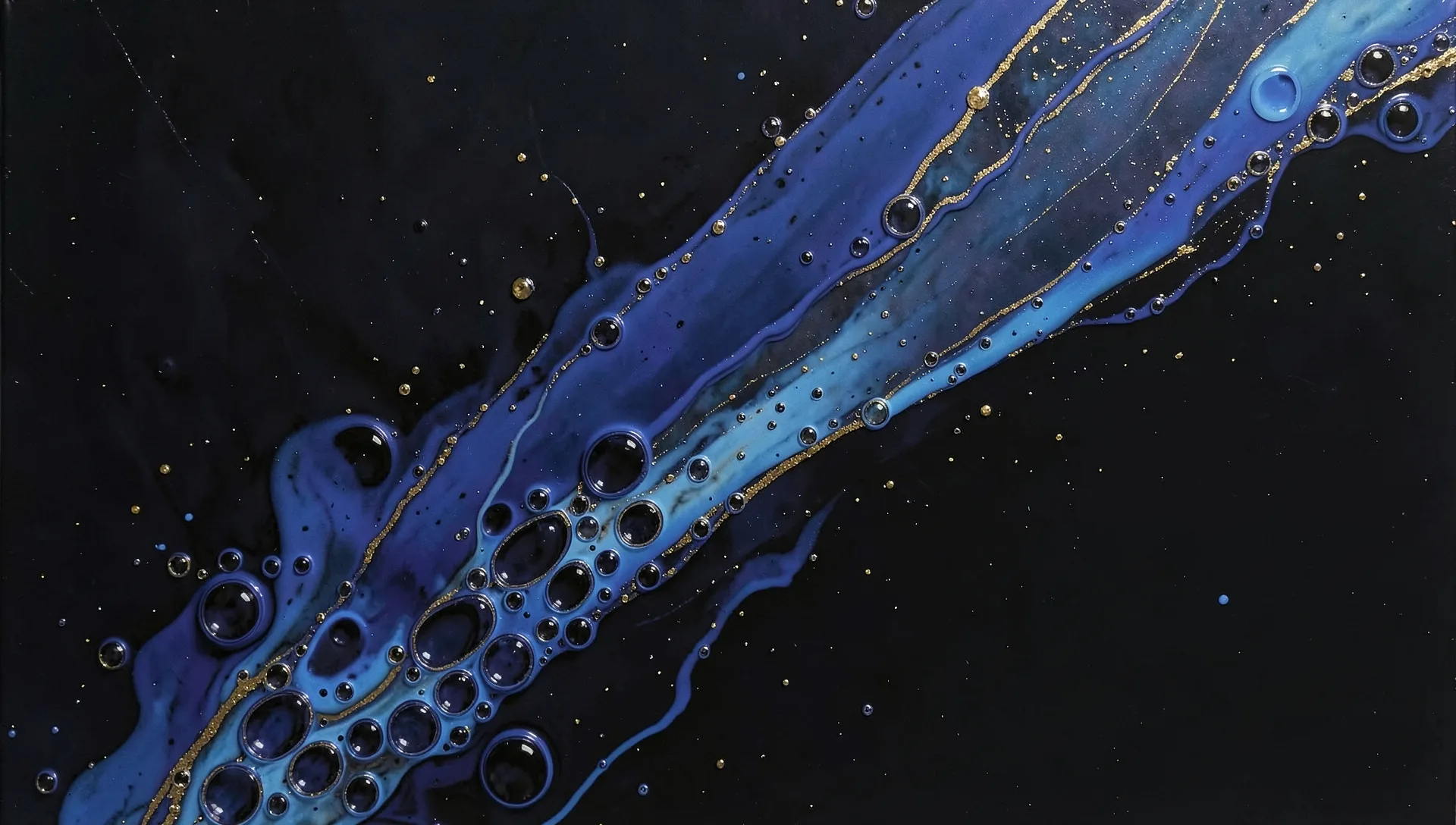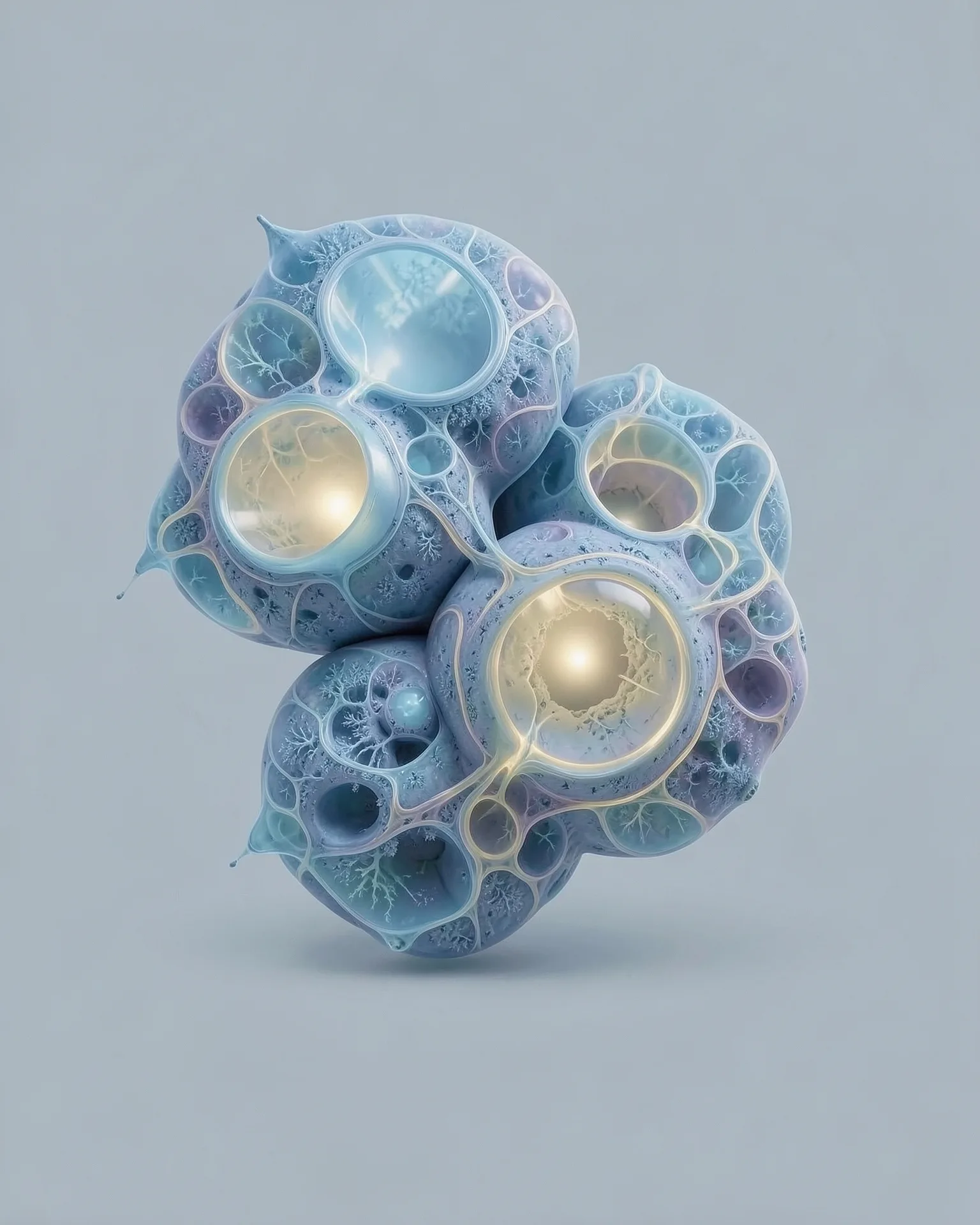
To understand abstract art, you do not need a secret vocabulary or a correct answer supplied by someone else. You need time to look. Abstract work often delays immediate recognition, which lets colour, shape, scale, texture and rhythm become visible before a subject takes over.
That delay can feel unfamiliar because we are used to identifying objects first: a person, a room, a tree or a horizon. In an abstract image, the first task is simpler and more open. Notice what the composition does to your attention.
Let the image set the pace
Start with the first visual event. Where does the eye go? Is there a bright area, a dense knot of marks, an empty field or a line that pulls the gaze across the surface? Then trace the route that follows. Some compositions move quickly through contrast and diagonals; others hold the viewer in a slow field of closely related tones.
There is no need to force a narrative while you do this. Give the image a minute before asking what it represents. A red shape can be a red shape before it becomes a flower, a wound, a signal or a memory. The same is true of a curve, a grid or a hazy area of light.
Read colour, form and rhythm
Colour has temperature, weight and distance. A saturated accent can appear close, while a cooler field may recede. Two neighbouring colours can vibrate, settle or make each other look brighter. Form adds another layer: rounded shapes can feel continuous and bodily, sharp angles can create tension, and repeated marks can establish a pulse.
Rhythm is often the bridge between these elements. Watch for patterns that repeat with small changes, intervals that widen or contract, and forms that appear to answer each other across the surface. The composition may be balanced symmetrically, or it may lean toward a point of instability. Both choices affect the way the work feels.
A useful question is: what is held together, and what is allowed to drift apart? That question can reveal the structure of a painting without reducing it to a diagram.
Make room for more than one reading
Associations are part of looking, but they do not have to be final. One person may see a coastline in a blue-and-white field; another may feel a machine, weather or a quiet emotional state. A later viewing can produce a new response. This flexibility is not a failure to understand the work. It is often the work's active space.
Personal experience matters here. A colour may recall a particular season; a repeated form may bring up music, architecture or movement in the body. The image gives the encounter a structure, while the viewer's memory and attention bring it to life.
Questions that help
Instead of asking only “What is this?”, try asking: Where is the visual centre? Which parts feel heavy or light? What repeats? What changes? Does the work feel closed, expanding, calm, tense, playful or uncertain? Which element would alter the whole composition if it were removed?
These questions do not turn art into a puzzle. They help the eye stay with the work long enough for a response to develop. Historical context can deepen that response too, especially for movements that shaped abstract visual language. History of Abstract Art offers that wider frame.
Keep looking without pressure
You do not have to like every abstract work, and you do not have to extract a lesson from each one. Sometimes a composition remains distant; sometimes it becomes more powerful after repeated encounters. Understanding is not a single moment of decoding but a practice of attention.
Explore this practice in the Fluid Studio Gallery, or return to What Is Abstract Art? for a broader introduction to abstraction, representation and visual freedom.